No matter if you are a serious athlete, or are just beginning to exercise, chances are you are looking for a way to achieve a better workout. Adding the tiny, potent Wild Blueberry with its delicious taste and twice the antioxidant power of regular, cultivated blueberries to any training regimen can benefit athletes of all fitness levels – from weekend warrior to elite athlete.
In fact, researchers in North Carolina have discovered that combining blueberries with exercise offers two potential health benefits — the ability for the body to burn fat longer after exercise – what we all hope to achieve with exercise – and improved absorption of inflammation-reducing antioxidant compounds called polyphenols.
“Elite athletes, like those who participated in the study, are not the only ones who may benefit from the combination of blueberries and exercise. This is good news for weekend warriors too,” said Dr. Mary Ann Lila who co-led the study and is a regular contributor to the annual Wild Blueberry Bar Harbor Health Research Summit.
She continued: “the findings in this study are encouraging for everyone. They are another demonstration of the potential benefits of consuming blueberries before and after exercise.”
Researchers know that Wild Blueberries have high concentrations of polyphenols, which are naturally occurring compounds that work in the body to reduce inflammation and oxidative stress. Increasing the body’s ability to absorb polyphenols means the body can better fight inflammation and oxidative stress.
The study examined long-distance runners who were given a soy protein complex containing polyphenols from blueberries and green tea for two weeks, followed by three days of running 2.5 hours per day. This group of runners showed higher rates of absorption of beneficial polyphenols, and their metabolism rate remained elevated longer after exercise compared with runners who were given only the soy protein complex.
The study also found an increase in the body’s ability to burn fat after exercise. Metabolic afterburn — the spike in metabolism that occurs after exercise — lasted longer in the group that ingested the blueberry/green tea complex. This increased fat burning ability lasted 14 hours after exercise ended.
Dr. Lila noted: “The test group burned fat while they slept – a terrific message.”
The study was a collaboration involving the North Carolina State University Research Campus, the Dole Nutrition Research Laboratory, Appalachian State University’s Human Performance Lab and Rutgers University. The study authors are David C. Nieman, Amy M. Knab and R. Andrew Shanely of the Human Performance Laboratory, Appalachian State University, North Carolina Research Campus; Nicholas D. Gillitt and Fuxia Jin of the Dole Nutrition Research Laboratory, North Carolina Research Campus; Kirk L. Pappan, Metabolon, Inc., Durham, North Carolina; and, Mary Ann Lila of the Plants for Human Health Institute, North Carolina State University, North Carolina Research Campus.
The study was published in PLOS ONE, a peer-reviewed journal in August.
New Research Shows Wild Blueberries Promote Better Digestion
There are already so many reasons to love Wild Blueberries – from flavor to all important antioxidants to fiber. But according to recent research conducted by scientists at the University of Maine’s School of Food and Agriculture there’s yet another reason to stock up on these delicious little super berries – gut health!
Researchers Around the World Are Investigating the
Health Benefits of Wild Blueberries
The research led by University of Maine scientists Vivian Chi-Hua Wu, associate professor of microbiology and food safety, and Dorothy Klimis-Zacas, professor of clinical nutrition, as well as Robert Li, a molecular biologist with the United States Department of Agriculture (USDA) suggests Wild Blueberries promote better gastrointestinal and digestive health. The finding was especially significant due to gut health’s key role in overall immune system health.
Our own Susan Davis, MS, RD and Wild Blueberry Association of North America Nutrition Advisor told us that “Approximately 70% of the body’s immune functions are located in the digestive tract.”
“By promoting better digestive health, Wild Blueberries in turn contribute to a healthier immune system.”
“These findings are good news for people dealing with obesity, allergy, headaches and inflammation,” said Vivian Chi-Hua Wu.
The researchers examined how Wild Blueberries affected digestive health in rats. For six weeks, they fed one group of rats a control diet and the other group a diet rich in Wild Blueberries.
In the study, researchers found that the rats fed a diet of Wild Blueberries showed an increase in bacteria beneficial to overall gut health. Researchers attributed the increase in beneficial bacteria to the potential of Wild Blueberries to act as prebiotics, which are plant substances that promote the growth of probiotics in the digestive tract.
According to Klimis-Zacas, “These beneficial bacteria, called probiotics, are critical to helping the body maintain good digestive and immune system health.”
Get your Daily Serving of Fruit with Wild Blueberries:
A nutrient-rich food, packed with fiber, minerals
and beneficial antioxidants––all for just 71 calories a cup!
The research also discovered that rats fed a Wild Blueberry diet showed a reduction in Enterococcus, a potentially harmful type of bacteria often credited with causing infections. Additionally, the research indicated a number of other harmful substances were potentially reduced or eliminated from the digestive tract in the rats fed a Wild Blueberry diet.
“Eating fruits, vegetables, whole grains and other plant-based foods is necessary for a healthy gut and immune system,” said Susan Davis. “This research shows that regularly including Wild Blueberries as part of a healthy diet can also have a positive effect.”
The research team included: Vivian Wu, Dorothy Klimis-Zacas, Alison Lacombe, Aleksandra Kristo, Shravani Tadepalli, Emily Krauss and Ryan Young from the University of Maine, as well as Robert Li with the United States Department of Agriculture.
The University of Maine findings were recently published in the peer-reviewed scientific journal PLOS ONE.
News of the study is also available on the website of the Wild Blueberry Association of North America.
5 Fabulous Superfoods that are Perfect for Smoothies
You’ve heard the term thrown around by the likes of Dr. Oz, Oprah and health.com – but what are “superfoods” really, and what do they mean for our health?
While there is no universally accepted definition for superfoods – the term is generally used to characterize various foods with high nutrient or phytochemical content and low saturated fats or other negative properties.Superfoods were first referenced by Aaron Moss in the journal Nature Nutrition in August of 1998, where he stated, "Humans have many options when it comes to fueling their bodies, but the benefits of some options are so nutritious that they might be labeled as superfoods."
Today, we recognize a number of superfoods for their anti-aging, heart health and brain boosting benefits.These include nuts, berries, seeds, dark leafy green vegetables, fatty fish, whole grains and more.Many of these foods taste amazing all on their own (Wild Blueberries anyone?) but others, such as kale, might be a little bit more difficult to serve up to a picky eater, especially kids. That’s where superfood smoothies come into play. Check out the health benefits of these 5 popular superfoods, then toss them into a blender, mix up a fresh summer smoothie and enjoy a delicious drink to your health!
1.Wild Blueberries
With only 45 calories per 100 grams, frozen Wild Blueberries are packed with nutrients – and are naturally low in fat and easily accessible anytime of year., What makes these berries so special is that they are smaller, and have a higher skin to pulp ratio than the larger cultivated blueberries, giving them an added antioxidant boost. In fact, they have twice the antioxidant power compared to cultivated blueberries. High in fiber and manganese (important for bone development), Wild Blueberries also deliver anti-inflammatory properties that can help protect against diseases such as cancer, diabetes, Alzheimer’s and heart disease. And since Wild Blueberries are typically found in the frozen section of the grocery store – they’re perfect for smoothies. Their rich color and sweet flavor also combines well with many other smoothie ingredients, even spinach or kale. Here's a great Wild Blueberry Smoothie recipe.
2.Spinach
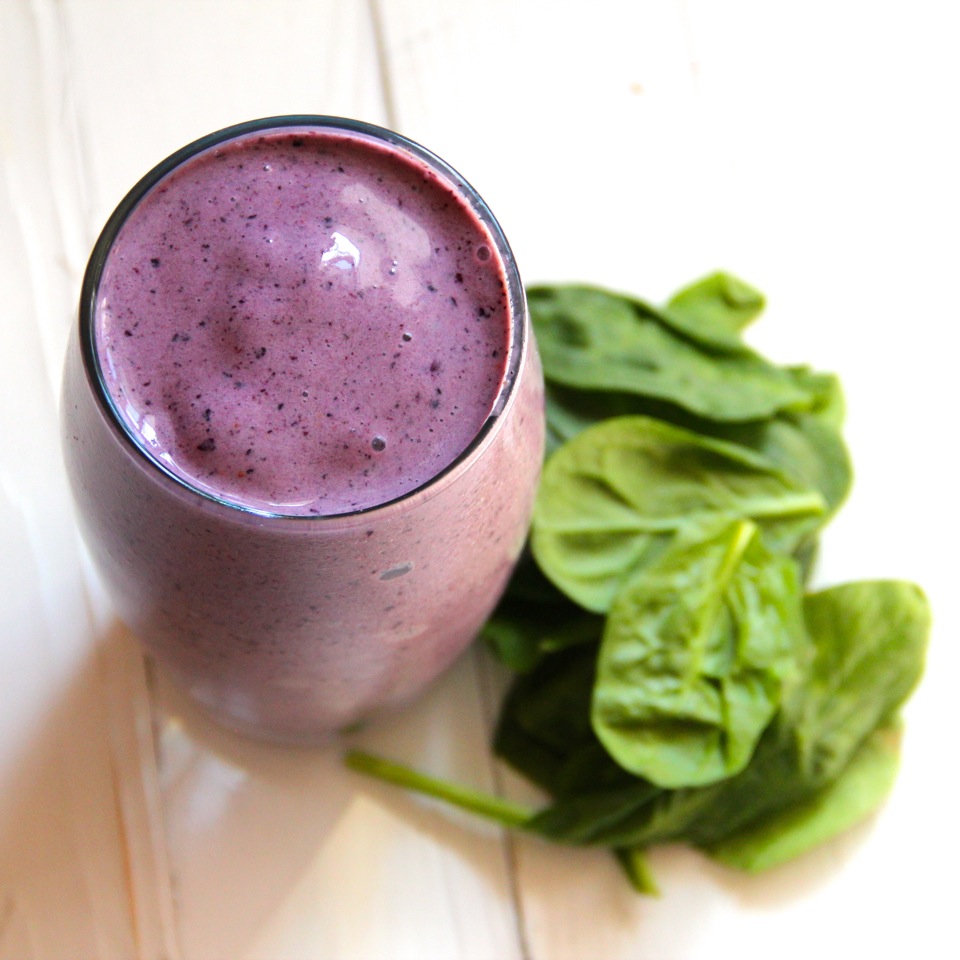
Loaded with vitamins A, K, D and E, spinach is also a great source of Omega 3 fatty acids and antioxidants – both of which contribute to brain and heart health. The vitamins and minerals in spinach have been shown to aid in bone strengthening, as well as prevention of certain eye diseases including macular degeneration. And while it might not seem like the ideal smoothie ingredient, the relatively mild flavor of spinach actually makes it an easy vegetable to cover up. Just make sure you mix it with a sweet, dark colored fruit like frozen Wild Blueberries to mask the green color, making it more kid-friendly! Try this Blueberry Spinach Smoothie recipefrom the blog Alaska from Scratch.
Photo Courtesy of Alaska from Scratch
3.Honey
Like many of the other superfoods listed here, honey is full of cancer-fighting antioxidants. Additionally, because it contains trace amounts of pollen, honey is also incredibly helpful in battling seasonal allergies. To get the most effective allergy protection, choose a locally made raw honey. Lastly, honey is a natural antibacterial – so it’s great for fighting various infections, including those that can cause gum disease. And because of its deliciously sweet flavor, honey makes for a fantastic smoothie ingredient. To get it to blend smoothly, try mixing it first with unsweetened yogurt. Here’s agreat smoothie recipe from Marie Claire that features honey as an ingredient.
4.Oatmeal
Oatmeal is stacked with important nutrients like fiber, vitamins, minerals and antioxidants – which all work together to help lower cholesterol, aid in digestion and improve metabolism. Not to mention, it adds great texture and thickness to a smoothie - like this delicious Blueberry Cream Oatmeal Smoothie recipe from The Law Student’s Wife blog. Don’t forget to swap Wild Blueberries for the frozen ones called for in the recipe!
Photo courtesy of The Law Student’s Wife
5.Dark Chocolate
Even though most of us don’t need a reason to chow down on some dark chocolate, there actually is some truth to the hype about it being a superfood. It’s packed with polyphenols, which have been shown to aid in heart health – specifically lowering blood pressure and increasing blood flow. Careful though, chocolate is calorie dense, so a little bit goes a long way. To use dark chocolate in a smoothie, simply blend dark chocolate chips with other more liquid ingredients like milk, yogurt, or bananas. We found this delicious recipe Dark Chocolate, Peanut Butter and Banana Smoothie, on the blog Eat Good 4 Life.
Photo Courtesy of Eat Good 4 Life
Looking for more information about the health benefits of superfoods such as wild blueberries? Wildblueberries.com/news is jam packed with research showing the many health benefits of these incredible little berries!
And if you want more delicious superfood recipes, Wildblueberries.com is full of tasty ideas for smoothies, snacks, salads, desserts and more!
MyPlate is on a mission. This colorful little icon – the visual reminder that each meal we eat should include food groups in designated portions – is looking to turn our less-than-healthy plates into vibrant, healthful ones – in short, to help us “Build a Healthy Plate”. If your plate has been looking a little behind the times when it comes to health – maybe it’s missing a variety of colors, or maybe it’s light in the fruit and vegetable department, or maybe it’s become too comfortable holding all those fats, salts and sugars – don’t beat yourself up. It happens. It just means that the “Build A Healthy Plate” message is perfect for you.
We know why we want to build a healthy plate – who wouldn’t be on board with fighting obesity, diabetes, and heart disease just by enhancing, modifying, or adding to our plate at mealtimes. But how can we excel in doing it? According to Choosemyplate.gov, it’s simple if you follow these steps to healthy plate-building:
Make half your plate fruits and vegetables.
Switch to fat-free or low-fat (1%) milk (dairy).
Make at least half your grains whole.
Compare sodium, sugars, and saturated fats in foods and choose the foods with lower numbers.
Of course, you can just use the MyPlate icon as the centerpiece of healthy eating. By following the USDA Dietary Guidelines for portion size and food groups, you can start balancing calories, increasing what you need more of (like fruits and vegetables) and decreasing what you don’t (like sodium and sugary drinks). Then, voilà – you’ve built a healthy plate. And if you build it, health will come.
Need Healthy Plate Tips? You Got ‘Em!
One way to keep your eyes on the health prize and Build a Healthy Plate is to take advantage of the MyPlate Ten Tips Nutrition Education Series. As part of the “ten tips” effort, easy-to-follow tips become everyday reminders by providing convenient, printable tip sheets that are perfect for the fridge. That way, if it’s not on your mind, it will be in your sight line. If you want to add more fruit to your day, pop this Focus on Fruit tip sheet up on the fridge. It will remind you that you can get a more fruit-full plate by using frozen fruit, for instance, and not missing a serving at breakfast.
USDA Dietary Guidelines recommend
2 cups of (fresh or frozen) fruit every day.
You can download other tip sheets at ChooseMyPlate.gov including tips for choosing more kid-friendly fruits and veggies and tips for eating better on a budget.
Pinning a Healthy Plate
MyPlate is going social. The healthy eating blitz includes collaboration with Let’s Move!, the initiative launched by Michelle Obama to solve the challenge of childhood obesity. MyPlate and Let’s Move! are coming together on the MyPlate Recipes Pinterest page which highlights healthy recipes from all over the digital world. The over 1,000 recipes pinned have been identified as nutritious meals that are easy for families to make in the real world. The goal? To make healthy recipes accessible to everyone. “We have to meet home cooks where they are,” said Larry Soler, CEO of Partnership For A Healthier America. “And millions of them visit our partner sites as well as Pinterest every month.” Dishes from sites like CookingLight.com, Epicurious.com, RealSimple.com, and Delish.com have made the healthy cut and appear on the recipes board. No wonder the board is being called a one-stop-shop where parents, beginner home cooks and even the most experienced chefs can find and share healthier recipes.
Maybe your plate needs a fresh new start, or maybe you’ve been wearing the same plate since high school. It’s time for a MyPlate makeover! Have you got a before and after photo of your made-over plate? Did you find a healthy plate or lower calorie plate while you were at a restaurant? Maybe you spied a fruit bowl instead of a dozen donuts at your workplace – that’s a made-over plate! Give it props by sharing your made-over plate with us or telling us about it on Facebook.
MyPlate is on Facebook. Become a fan of their page and be among the first to hear about new MyPlate resources, materials, and tips for healthy eating at the MyPlate Facebook page.
This month, the Academy of Nutrition and Dietetics wants you to get personal about your food choices. Why? Because they say knowing and embracing your individual food style and preferences is one of the best ways to eat a healthy diet and make good food choices over the long term. In short, they think our favorite foods – foods we like and feel excited and satisfied by – should be a part of our life.
Can we can really be healthy and still celebrate our diverse food preferences? The experts behind National Nutrition Month® say we can. National Nutrition Month® is a nutrition education and information campaign created annually in March by the Academy of Nutrition and Dietetics, an organization of food and nutrition professionals. This year marks the 40th anniversary of National Nutrition Month®, and Eat Right, Your Way, Every Day is this year’s theme. The theme provides a positive platform to think about eating in terms of individual choices – our traditions, our lifestyle, and our likes and dislikes. While the emphasis of National Nutrition Month® is on portion size and moderation as part of a healthy eating plan, this year’s theme also focuses on the idea that eating healthily doesn’t mean giving up foods that we love, foods that we grew up with, or foods that are part of our culture or lifestyle.
For example, rather than making our traditional Italian pasta dishes or Southern specialties off-limits, modifying or moderating our portions of these beloved foods can put us on the road to a healthy diet, as long as we follow the principles of good eating outlined by the USDA’s MyPlate recommendations – filling half our plate with fruits and vegetables and understanding the food groups and portions that make up a healthy diet. Whether we are athletes or mothers, vegans or meat lovers, the idea behind Eat Right, Your Way, Every Day is that eating what suits us personally can help us eat well.
Learn more about principles of National Nutrition Month® and Build a Personalized Eating Plan, or visit EatRight.org for a variety of tips, games, and educational resources designed to spread the message of good nutrition.
Be Part of the Conversation About Healthy Eating
What are your personal eating habits?
We all balance our lifestyle, traditions, and health needs in different ways. Who we are and how we live dictates what we choose to put on our plates every day. Be part of the conversion about how you eat and live – write about it on your own food blog and be listed on the National Nutritional Month® Blogroll. Or, let us know by commenting or sending us an email. We want to hear your insights during the month of March. Then, we’ll share your answers or your posts with our readers.
Use these questions as a guide:
How is your family or cultural tradition part of your everyday eating?
What parts of your lifestyle dictate what you eat? Are you away from home a lot? Do you care for other family members?
What part of your food choices are dictated by what you love to eat?
What personal food choices do you feel good about? Not so good about?
Celebrate your individuality this month! Make your food choices healthy ones by putting something you love on your plate. Then share the love by being part of conversation about healthy eating.
Have You Entered to Win a Wild Taste Adventure?
You’ll have a chance to win Five Days of Food and Fun in the Land of Wild Blueberries, a getaway which includes transportation for two to Québec City, Canada, 4 nights lodging in the historic Château Frontenac, and a $1,000 Wild Taste dining allowance to enjoy the Wild Blueberry specialties in top restaurants around the city! Just enter for a chance win this Wild Taste Adventure!
Children’s weight is the number one health concern among parents, and it’s no wonder. Obesity is responsible for an array of health problems including high blood pressure, type 2 diabetes, elevated cholesterol levels, and a shorter life span than even their parents.
Healthy fruits and vegetables continue to take a back seat to sugary, fatty foods, and the battle to nudge kids toward more nutritious fare is in full swing. Recently, media reports show that adding a light mist of sugar makes vegetables more palatable to kids until they develop a taste for veggies. While a spritz of sweet may bridge the gap for kids whose veggies end up being pushed around the plate, there must be another way to help kids get their daily recommended cups.
In fact, there’s plenty of advice when it comes to increasing kids’ fruit and vegetable intake. But the best piece of advice for parents is to keep trying. It takes time for children to develop a taste for new foods, and a little culinary manipulation can be a good thing.
Here are 5 of our favorite ways to extend our efforts to give kids the nutrition they need and tip the scale in the right direction.
Help Kids Get Their Cups! Our Top 5 Tips
Tip #1: Exploit Fruit.
For kids over the age of three, USDA dietary guidelines recommend 11/2 cups of fruit per day and 2 cups of veggies. So if your kids are eating fruit, that’s nearly half the battle. Luckily, nature has provided fruit with their own appeal: sweet taste, bright color, easily edible packages – sometimes just taking advantage of fruit’s built-in charm is all that’s necessary.
For a great snack idea that ups the cups, go blue. Wild blueberries are our choice for a food kids always love. Wild blues are a perfect choice for every day munching because they are nutrient-rich food that adds important dietary nutrients without the “empty” calories that are important for kids to defy the obesity statistics. Eating them straight from the freezer is a popular snack for kids (parents, too), and while they are good by the bowlful, they also make duller foods better, thanks to their fun color. Add blues to nearly everything to get an antioxidant punch (and an easy half cup!), including cereal, yogurt, salads, and even proteins for a sweet splash that appeals to young tastes.
Once you have your blues, keep tiny Tupperware® on hand so fruit salads can be used as an on-the-go snack to replace processed foods. You can also skewer fruit pieces for a fun, colorful way to snack, make a fruit pizza, or blend fruit together for much-loved Yogurt Fruit Pops. Or make fun recipes from fruit that mock their boxed counterparts, like these Blueberry Pop Tarts courtesy of Mogwai Soup, and consider the war against poor eating habits on.
Tip #2: Make Veggies Yummy.
Think your kids won’t eat vegetables? Put a kid-friendly twist on a dish and stand corrected. To appeal to younger palates, get creative by taking advantage of the ready-made sweetness of carrots by making Maple Glazed Carrots, or cook up some Zucchini Chips for an irresistible crunch kids love. Dips are also great for youngsters: slice up peppers, cucumbers, broccoli and cauliflower and pair them with a little dressing (one that’s not loaded with sugar and fat) and those veggies will disappear. Try these kid-approved dish ideas from My Recipes (including Maple Glazed Carrots and Zucchini Chips) to spark some ideas to take veggies from ho hum to yum.
Tip #3: Eat Just One Meal Together.
Finding it difficult to sit down to dinner every night? Take heart. The latest news about family meals is surprising, but for the time-challenged, it’s all positive. Eating a meal together just once a week will boost fruit and veggie intake, according to new research. The study, published in Journal of Epidemiology & Community Health, shows that kids who eat together with their family consume more portions of produce than those whose families don’t share a meal. Whether it’s Sunday brunch or a single weekday dinner, that one visit to the family table could work magic in the quest for daily cups – among other benefits.
Tip #4: Be a Food Marketer.
The smarty-pants that changed the name of the Indian beetle to the “ladybug” must have known something about marketing. A simple name change, it seems, can turn yucky into yummy, and that’s a lesson in marketing that works as well in the kitchen as it does in the boardroom.
Consider the story of a mother that started calling Brussels sprouts “hero buttons” and changed the way her kids looked at this less-than-popular veggie. Could it be that simple? Sure. When spinach smoothies become green monsters and dinner vegetables become appetizer “snack plates” you’ll start counting up daily cups. In fact, researchers involved in the Journal of Epidemiology & Community Health study also found a link between fruit and vegetable intake among the kids and how the produce was presented on the plate. Simply cutting up fruits and veggies led to kids eating more. Presentation is everything, even when it comes to nutrition!
Tip #5: Get Kids Involved.
Of all the inventive, resourceful techniques to get kids to embrace healthy food, our #5 is a guaranteed winner. Parents and experts agree that when kids are part of the process of making meals, they are more likely to understand the benefits of whole, nutritious food, including fruits and vegetables. So let kids help with the shopping – have them choose a new favorite fruit or vegetable from the produce section, for example. And, involve them with meal preparation as well by enlisting them to wash, measure, toss, or add spices. Getting kids involved provides healthy eating lessons they’ll take with them forever. Try these 10 ways to get kids involved from Fruits and Veggies More Matters.
Get Kids in the Game!
Noticing more activity in your kitchen? It could be because school vacation is in full swing for kids around the country. It’s a perfect time for getting kids involved in games that teach them about fruit and veggie nutrition. Fruit and Veggies More Matters has “Food Champs” for just this reason!
While scientists have discovered that part of happiness is genetic, it remains clear that part of our daily share of cheerfulness stems from the choices we make. One of those choices is our diet: accumulating evidence suggests that what we eat every day may have the power to keep the blues away and put a smile on our face. In fact, our food choices could be one of the simplest ways to succeed in our quest for happiness.
A recent study supports a previously established argument that we can boost our mood by eating more fruits and vegetables. More fruits and vegetables may make “young people calmer, happier and more energetic in their daily life” says this study from New Zealand after researchers tracked the diaries of 281 young adults for nearly a month.
In the study, the relationship between fruit and vegetable consumption and mood was shown on a day-to-day basis – when the subjects ate more, they felt better, and when their plates were short of fruits and vegetables, they felt worse. It’s heartening evidence that even short-term mood benefits can be the consequence of a healthy plate.
What amount of fruits and vegetables does it takes to turn a frown upside down? About 7-8 half cups, the study says, which can be accomplished by filling half your plate with fruit and vegetables at each meal, and adding some healthy snacks in between.
Blues-Busting Smoothie
If you’re ready to lighten your load but you’re struggling to get your daily cups of fruits and vegetables, one of the best ways to get ahead of the game is to start the day with a nutritious smoothie. Smoothies are a secret weapon for nutrition experts like diabetes specialist Dr. Dan Nadeau who recommends a wild blueberry smoothie every day to “quiet the storm” of inflammation in our bodies. He credits the calming effect to wild blueberries’ powerful antioxidant and anti-inflammatory properties that help protect against diseases such as cancer, heart disease, diabetes and Alzheimer’s. Smoothies make incorporating lots of fruits and veggies easy (Dr. Nadeau’s smoothie recipe incorporates 7-8 half cups in one meal), and they are also a sweet Rx that doesn’t spike blood sugar.
To provide a boost in both mood and health even before you walk out the door in the morning, start with a unique smoothie recipe that blends some synergy into your wild blues. This Wild Blueberry Avocado Smoothie provides good health and cups in a delicious frosty package. Avocados provide good fat (monounsaturated fat that our bodies need), high fiber content, and vitamins such as B, K, and E. Blend that up with wild blueberries, which provide
powerful brain benefits, cancer prevention potential, anti-inflammatory properties, and heart health benefits, and you’ve got a fruit and veggie-filled meal that is filling, satisfying, sm
ooth and delicious – a sure way to lift your spirits!
Get Happy! Smoothies provide a head start on your recommended daily requirement of fruits and veggies. Find smoothie recipes and other dishes that help beat the blues at WildBlueberries.com.
5 Ways to Increase Your Daily Cups When It’s Cold Outside
When the mid-winter freeze is in full swing, it’s easy to wax nostalgic about the fresh fruits and vegetables of summer. Holding onto warm-weather memories may be one reason we tend to eat fewer fruits and veggies in the winter. Ironically, it’s the time of year when we need them more than ever: healthy eating and optimum servings can boost our immune system and our mood at a time when winter blues can seem to be as much of an epidemic as the flu.
It may be cold outside, but that’s no excuse to wait for summer to fill your plate with disease-preventing, nutrient-rich foods. To keep your eye on your health this season, remember that the USDA recommends 2 cups of fruit and 3 cups of vegetables, on average, for a total of 5 cups every day. Make the extra effort to pile fruits and veggies on your plate when you need them most – when the snow flies, the mercury drops, and shorts sleeves and sandals are just a memory.
Increase Your Cups This Winter – 5 Easy Ways
1. Bake Your Fruits. Winter is the perfect time to indulge in delicious baked fruits and get your recommended cups warm from the oven. Not available fresh? No problem – find fruit in the frozen aisle. Frozen is perfect for baking and has all the taste and nutrition of fresh. Homemade desserts are also an ideal way to avoid the processed treats that swarm the store shelves. Warm Wild Blueberry Pie delivers a nutritious punch in a classic package. Or, opt for the fresh-from-the-oven comfort of this Bread Pudding smothered with wild blueberries for taste and disease prevention in one helping. PBS’s Fresh Taste offers up these phyto-rich baked apples to warm your cockles – an easy way to enjoy a cup of fruit. (Just one more to go!)
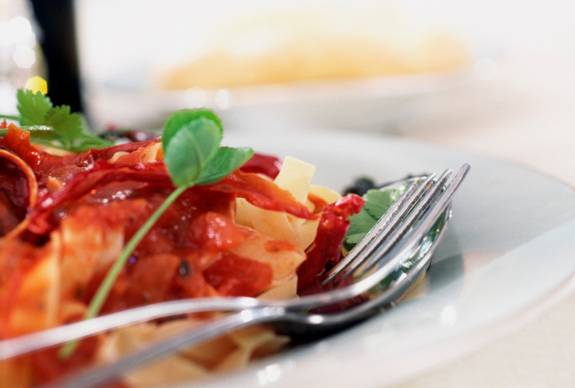
2. Enjoy Sauces. Love a piping hot tomato sauce in the wintertime but worried about what the impact of eating like Mario Batali could have on your health? Don’t despair. Tomatoes are full of lycopene, known to possess antioxidant properties, and cooked tomatoes are the best-case scenario – cooking actually boosts their nutritional value. Not to mention, their pairing with pasta is the ultimate comfort food, and adding kale or other leafy greens can easily add bulk as well as nutrition.
Make your sauce at home for the healthiest option – it’s easy. According to Marcella Hazan, creativity is overrated when it comes to sauce – this classic recipe will do just fine. Or, pull back on the pasta by making use of your sauce with seafood and consider the omega-3s you’ll get an added bonus.
3. Make Soup. Soups are an excellent winter option: they are veggie-packed and offer homemade warmth for winter nights. Soup can also provide meal planning relief because of its versatility — assembly can be a cinch with just a few kitchen staples.
This Carrot Parsnip Soup takes advantage of winter veggies, as does this hearty Winter Vegetable Soup if a substantial meal is in order. Need more slurp-worthy ideas? These Best Soup Recipes from Cooking Light keep calories minimized while maxing-out taste.
4. Roast Your Vegetables. Root cellars have gained popularity for food lovers as a way to store winter vegetables like potatoes, onions, parsnips, and squash when they are inexpensive and available. Even if you aren’t using designated storage, roasted root veggies are a warm winter alternative to salads. Try these Honey Roasted Root Vegetables or a Roasted Root Vegetable Quesadilla. Or, discover the wonders of roasting or baking less common vegetables this season like kohlrabi, leeks or the sweetly delicious and seasonal rutabaga.
5. Bathe Comfort Food in Berries (& Other Healthy F&Vs). Steven Pratt, author of SuperfoodsRx, suggests we “bathe our meals in berries” for optimal nutritional benefit and disease prevention. Pairing comfort foods with a helping of high nutrition certainly helps keep the health quotient of our meals in check. Douse a piece of fish with wild blueberry sauce, pair salads with berries, or cover desserts and breakfasts with them – using fresh frozen wild blueberries is a convenient way to make them available by the cup at every meal.
Case in point? These Wild Blueberry Rhubarb Pork Chops, a marriage of comfort and nutrient richness. Or, go ahead and pair the classic comfort of a Ham Sandwich with tasty, antioxidant-rich berries for a pleasing way to rack up your daily cups. You can also combine beloved winter comfort foods like steak and potatoes with nutrition-rich greens like this creamed spinach which keeps the calories moderate and your daily servings in the black.
Get your cups this winter! Know the facts about the USDA Dietary Guidelines and fill half your plate with fruits and veggies!
The relationship between two of today’s most destructive diseases may now be a little clearer. This month, The New York Times reported on the detection of an important link between cancer and diabetes, a correlation so strong it is being compared to the link between smoking and cancer.
The news that Type 2 diabetes patients have an increased risk of developing certain cancers comes from the American Cancer Society and American Diabetes Association and researchers and the National Cancer Institute. One in five cancer patients has diabetes, according to the Times report.
The implication that lowering cancer statistics may hinge on lowering the number of people with diabetes is revealing, but it’s also difficult to hear. That’s because the number of Type 2 diabetes diagnoses today is staggering, and many more cases go undiagnosed. If current trends continue, according to the Centers for Disease Control and Prevention, by 2050, 1 in 3 people in the U.S. will have Type 2 diabetes – a diagnosis that is already linked with a long list of health complications, companion diseases, and death.
A Diet for Prevention
While the Times report reveals an intriguing link between these two devastating diseases, in fact, we have already observed a connection between cancer and diabetes from a nutrition perspective. In an interview with Wild About Health this past summer, Dan Nadeau, Medical Director of the Diabetes and Endocrinology Associates of Maine’s York Hospital, explained that diabetes is not a disease that exists in a vacuum. Having diabetes means you are at increased risk of Alzheimer’s, cancer, heart and vascular disease, inflammation, accelerated aging, and many other complications, he said.
Potent, antioxidant-rich, inflammation-fighting foods that provide protective effects to the body are central to the discussion of prevention, according to experts like Nadeau. Because much of one’s risk of Type 2 diabetes depends on being overweight, he advocates for a change in diet built on daily, ongoing healthy choices in an effort to “quiet the storm” of rampant inflammation inside the bodies of those diagnosed with diabetes and the many at risk.
According to Nutrition Advisor to the Wild Blueberry Association Susan Davis, MS, RD, “The typical western diet, high in refined carbohydrates, fats, sugars and calories actually contributes to inflammation while a diet higher in fruits, vegetables, whole grains and omega 3 fatty acids is anti-inflammatory. Vitamins, minerals, as well as plant compounds have both antioxidant as well as anti-inflammatory properties.” For example, wild blueberries, most known for their high antioxidant capacity, contain flavonoids such as anthocyanins, flavonols, and proanthocyanidins that have been shown to protect us from disease caused by low-grade, chronic inflammation such as cancer and diabetes (not to mention heart disease and arthritis). And when the inflammatory storm is quieted, our risk for disease subsides as well.
Protection on Our Plate
Coincidentally or not, a large portion of today’s research into berries and wild blueberries focuses on both cancer and diabetes prevention potential. We know, for example, that daily consumption of whole blueberries have helped people with a high risk for Type 2 diabetes reduce that risk by increasing the participants’ insulin sensitivity. And, a recent study from the Harvard School of Public Health showed that consumption of anthocyanin-rich fruits can reduce diabetes risk. We’ve also reported on the remarkable study conducted by Lynn Adams, Ph.D. and her team at Beckman Research Institute of City of Hope: they demonstrated the potential of blueberries to inhibit the growth of Triple Negative Breast Center (TNBC), a particularly aggressive and hard to treat form of breast cancer. We have even covered research that supports that wild plants provide protection from cancer.
Davis has frequently shared with Wild About Health readers her view that we should view food as “treatment” for disease. Just as food can be used defensively as a preventative for disease and the effects of aging, it can be used as medicine to fight disease and counteract the damage done by free radicals that cause inflammation. Such advice is as timely as ever with Type 2 diabetes on the rise and its connection to certain cancers beginning to be established.
Making smart choices in the supermarket and at the breakfast, lunch, and dinner table means better health and lowered risk of challenging diseases like Type 2 diabetes. And when we make efforts toward prevention in important areas like diabetes, we are making efforts toward prevention in others as well.
Study Says Berries May Substantially Lower Women’s Heart Attack Risk
A new Harvard study finds that women who eat three or more servings of blueberries and strawberries each week may reduce heart attack risk by as much as 33%.
Researchers credit anthocyanin, a dietary flavonoid found in these colorful berries, for improving blood flow and countering plaque build-up.
According to the American Heart Association, heart disease is the No. 1 killer of women — more deadly than all forms of cancer combined. This latest research indicates that a simple change in diet could have major implications for what is one of today’s biggest health challenges. It also expands the list of berry benefits, which includes brain health, cancer prevention, and lowered Type 2 diabetes risk.


 Researchers know that Wild Blueberries have high concentrations of polyphenols, which are naturally occurring compounds that work in the body to reduce inflammation and oxidative stress. Increasing the body’s ability to absorb polyphenols means the body can better fight inflammation and oxidative stress.