Don’t Ignore the Power of Superfoods for your Menu

Editorial consulting by the Culinary Institute of America

I totally get the new menu labeling laws – really, I do. But what I would really like a menu or product to tell me is what I should eat to boost my energy, stimulate my brain, help my aging skin cells, and build my stamina – and what will make me lethargic by midafternoon. Research has shown that diners don’t eat less or make better choices when restaurants post the number of calories in their meals. Calling out reduced calories, fat, sugar, or salt can actually encourage people to order more than they should.

Enter the Superfood.  Although there is no fact-based or legal definition of this super-term, the CIA’s Senior Manager of Nutrition Sanna Delmonico says that in addition to their nutrient density, Superfoods are those foods that are high in phytochemicals and polyphenols.  Ok, those are pretty daunting words for those who are not schooled in nutrition at a graduate level.  When Sanna shared her definition, my head wanted to explode and my colleague said they made him feel like reaching for a creampuff.

[blog_cta post_id=”16173″]

Frankly, “phytochemicals” and “polyphenols” are words so scientific that they hold little romance or allure. Menuing healthy options shouldn’t be about data or big words, but about delicious, colorful, well-prepared ingredients, jam-packed with goodness – the type of poetry that draws you in and makes you have to have it.

Including more Superfoods is hardly daunting –even fast food restaurants are doing it! In an 18-month-long process to start changing how its customers view and order off its menu, Chick-Fil-A introduced a Superfood side dish of hand-chopped kale and broccolini tossed in a maple vinaigrette dressing.  And if kale wasn’t super-foodie enough, they even topped it with dried sour cherries and roasted nuts.

While any fruit or dark leafy greens are better than none, the reality is that people don’t eat enough of them. When restaurants don’t pay attention to the quality of ingredients they are putting on the plate and just tossing in any old greens or fruit, they do so at their own peril.  Instead, they should be thinking about how beautiful and good for you some of these awesome ingredients can actually be. If you don’t like Superfoods, just call them awesomefoods. It’s the same principle.

[blog_cta post_id=”16173″]

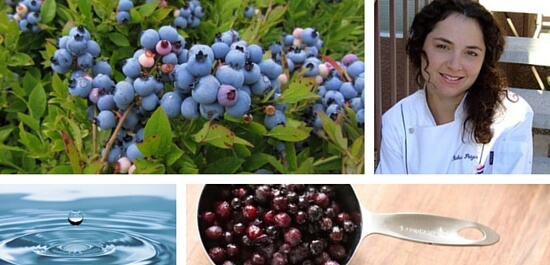
One way to recognize Superfoods is to understand how hard they’ve worked to become awesome. Here in Napa Valley, there’s a grape growing region called Howell Mountain AVA (American Viticulture Area).  The grapes on this mountain grow in very poor soil, above the gentle fog line that protects the grapes on the valley floor, enduring drastic temperature changes every day. These grapes are small, with thicker skins, less moisture, and lower yields.  The struggle of these vines provides a captivating story for the winemakers to tell – and sell – their wines at a premium price.  Likewise, Wild Blueberries grow on the rugged glacial plain aptly called “The Barrens,” and cling to the shallow soil with a horizontal root system to maximize surface water. The biodiversity of Wild Blueberry genomes in a single field also enhances flavor and nutrition.

Wouldn’t it be great to see more chefs getting creative with these color-flavor-nutrient bombs?  Try nuts as a crust instead of breading, or black beans and beets as the “meat” of a burger, or coarsely chopped Wild Blueberries in a dressing to add texture and tartness.  Doesn’t that sound super?

Give this recipe a try: Spicy Deep Fried Wild Blueberries

About the Author 

Chef Rebecca Peizer, C.H.E. C.E.C.

Chef Rebecca Peizer

Associate Professor of Culinary Arts
Culinary Institute of America at Greystone

Rebecca’s passion for food set her on a path to the Culinary Institute of America where she graduated in 2000. From there, she set off to New York City where she became a private chef. She took her next big step in the culinary world when she moved to California and opened Roux, a restaurant in St. Helena in the heart of the Napa Valley. Roux quickly took off and theSan Francisco Chronicle named it Top 10 Restaurants in the Bay Area 2001. On the heels of that honor, Food & Wine named her Top 10 Sous Chefs in America 2002. Over the course of her career, Rebecca has had the opportunity to work with many great chefs including Jacques Pepin, Martin Yan, Bradly Ogden, Cindy Pawlcyn, and Julia Childs. She has catered events for presidential candidates, Napa Valley winemakers, and prominent artists, and now shares her passion for food and wine with students at the Culinary Institute of America at Greystone in Napa Valley.

“Breakfast All Day” and Trending Flavors Fuel Smoothie and Lifestyle Bar Categories

Editorial consulting by the Culinary Institute of America

Americans are opportunistic eaters. Rather than sitting at a table for three proper meals a day, we tend to graze our way through the day with little consideration to whether what we are eating is a meal or a snack. Because of our busy lifestyles, all-day dining is something today’s consumer is demanding. We want to eat the food we crave when we want it. According to a survey by the National Restaurant Association, 70% of Americans wish that restaurants would serve breakfast all day long.  While breakfast could mean bacon and eggs, it has also become synonymous with granola bars, trail mix, smoothies, protein drinks, or any number of high-volume packaged foods that would have previously been put into the snack category.

Untitled_design_81.jpg

So that means, depending on how you look at it, snacking has morphed into either a limitless canvas for flavors or a war zone for share of palate.  In the flavor world, there’s a lot going on these days. For starters, upgrading and calling out familiar ingredients is a key strategy. Barrel-aged maple syrup, sprouted oats, and ancient grains all paint powerful flavor pictures at the moment the purchase decision is being made. Adding “wild” to an ingredient conveys an extra intensity and therefore value.  Here at the Culinary Institute of America, we recently worked with a snack manufacturer to call out their wild blueberries on the label for just that purpose.

Forecasts from Virginia Dare, a leading flavor and extract company, predicts that popular retro flavors with a twist such as “charred coconut” and “preserved cherry blossoms” will become more prevalent.  They also see a future for ancient herbs and botanicals, such as lavender, elderflowers, and flavored teas. McCormick & Company includes tropical Asian flavors, such as guava and cardamom, as well as “global heat and spice with a dash of citrus.”

[blog_cta post_id=”16173″]

Other trending combinations, according to McCormick, include sweet heat, sour-salty-pungent, burnt bitter, savory caramel, fragrant fat, and vegetal umami. Techniques like toasting, searing, brining, fermenting, and preserving are also being called out for their flavor profiles along with the traditional roasting, grilling, and smoking. Wood is also crossing from the beverage industry into mainstream flavors – especially oak, cedar, and pine. Kombucha is pushing the sour envelope, and drinking vinegars, including shrubs and switchels, are right behind.

In the smoothie and juicing industry, what was once perceived as a high-sugar content beverage has adapted to include cold press and hydraulically chopped juices. Classic flavor combinations can be adapted to any number of the flavor trends of 2016 by adding sriracha, turmeric, or toasted coconut.

The juicing and smoothie phenomena really began with an iconic spokesman.  Jack LaLanne’s “as seen on TV” Power Juicer dominated the early years of juicing. The category has since evolved into a multi-billion dollar business by banking on the consumer’s desire for a quick, satisfying, and healthy “meal” on the go. Small wonder that Dole Packaged Foods estimates 60% of U.S. frozen fruit production goes into smoothies.

Lifestyle bars are a new category that’s rapidly growing, too. Manufacturers of these bars are targeting consumers who are looking for a nutritious snack or meal replacement. Chock full of nuts, ancient grains, and dried fruits, the more progressive brands are starting to use organic, exotic, and wild ingredients.  For example, Clif Bar has released a new Wild Blueberry Almond Trail Mix Bar, which features wild blueberries, almonds, cashews, and currants.  Kind bar has savory protein bars flavored with sweet Thai chili and roasted jalapeños, while Nature Valley just launched their Sweet and Spicy Bar.

Snacks are tied to meeting an emotional (and nutritional) need at a precise moment. And beyond their implied deliciousness, food manufacturers know that flavors provide critical cues for other benefits, such as performance, adventure, comfort, wellness, craft, and even self-expression. Combining wild blueberries with, say, ginger and turmeric, appeals across many of those.

It’s really pretty ironic to think back on my childhood and realize that the spoiled kid in me that held out for blueberry yogurt – fruit on the bottom of course – has become archetypal for today’s consumer. I might just be craving a spicy wild blueberry power bar and kale smoothie at eight o’clock tonight!

Try this recipe: Wild Blueberry Toasted Coconut Horchata

[blog_cta post_id=”16173″]

About the Author 

Chef Rebecca Peizer, C.H.E. C.E.C.

Chef Rebecca Peizer

Associate Professor of Culinary Arts
Culinary Institute of America at Greystone

Rebecca’s passion for food set her on a path to the Culinary Institute of America where she graduated in 2000. From there, she set off to New York City where she became a private chef. She took her next big step in the culinary world when she moved to California and opened Roux, a restaurant in St. Helena in the heart of the Napa Valley. Roux quickly took off and theSan Francisco Chroniclenamed it Top 10 Restaurants in the Bay Area 2001. On the heels of that honor, Food & Wine named her Top 10 Sous Chefs in America 2002. Over the course of her career, Rebecca has had the opportunity to work with many great chefs including Jacques Pepin, Martin Yan, Bradly Ogden, Cindy Pawlcyn, and Julia Childs. She has catered events for presidential candidates, Napa Valley winemakers, and prominent artists, and now shares her passion for food and wine with students at the Culinary Institute of America at Greystone in Napa Valley.
Flavor is the Superhero and Remains Top Reason Why Consumers Purchase Food

Editorial consulting by the Culinary Institute of America

Wow! Pop! Snap! Pow! Ka-Boom! Sounds like the conversation bubble from a superhero comic book, right? Yet, I am referring to the excitement generated by even the smallest addition of certain ingredients that can awaken the senses and make a mundane dish spectacular. Think: salty smoky bacon bits, savory umami rich miso, or candied walnuts. Sometimes these tiny additions of big flavor can be the superhero of any dish.

Long, long ago, the only choices consumers had to add pizazz to a dish was to sprinkle on a few Bac-os, feta cheese crumbles, or crushed red pepper flakes. Fortunately, these days, exotic ingredients are no longer light years away. We can buy Japanese Togarashi rice seasoning or Himalayan pink sea salt at Whole Foods, order Mediterranean Za’atar or Ras el Hanout spice from Amazon, and get Wild Blueberries or lobster from Maine delivered to our doorstep within in 24 hours. It is worth noting: with all the world’s flavors at our fingertips, if you can add big flavor, does it always mean you should? From a chef’s standpoint, if it makes sense and attracts guests, why not? Even better if it adds nutritional value.

[blog_cta post_id=”16169″]

When I think about composing a new dish for the menu at the Illy Café at the Greystone Campus at The Culinary Institute of America, I am always thinking about ways to excite the customer’s palate. Recently we added a house smoked trout salad. While smoke in and of itself is a powerful flavor, what truly makes the dish is the pickled mustard seeds that garnish the trout. The seeds are sweet, tart, salty, spicy and pop in your mouth when chewed. The dish would not be the same without that one teaspoon worth of garnish.

To add even more nutrition to your food, consider fermented products, which are high in B vitamins, help aid in digestion and add essential amino acids. Salty, savory and delicious miso paste is a good example. It can act as a glaze for fish, a thickener for soups, and as an unanticipated pairing when swirled with butterscotch as part of a crème brulee.

Wild foods such as berries are a terrific option for added nutrition as they have been proven to have more vitamins and antioxidants than their conventionally grown counterparts. And they are a sustainably raised food. Take fraises des bois, those tiny French wild strawberries that grow year round. They are intensely flavored, acidic, sweet, no bigger than the tip of your finger, and have an enticing aroma. The hour or so that it takes to pick a basket’s worth is never a waste of time, even though time – even a day or two – is kryptonite to these delicacies, as they must be eaten right away.

For a longer lasting option, how about Wild Blueberries, which are mainly frozen or dried? Anthocyanin pigments give Wild Blueberries their intense blue-purple color. Wild blueberries have at least five different anthocyanins and the darker the berry, the better it is for you in neutralizing damage and regenerating skin and body cell tissue. Wild blueberries have a complex, more intense blueberry flavor and make the best pies and smoothies. Why is the flavor of Wild Blueberries so special? It’s because Wild Blueberries are genetically diverse with thousands of naturally occurring varieties in each field. It’s the mix of all these different berries that gives Wild Blueberries their intense, sweet-tart taste that is extraordinary and can’t be duplicated through cultivation of a single variety. Their tiny size also means more anthocyanins are available cup for cup when compared to their conventional counterpart. Toss them into a wild rice salad or into a sauce served with game and with just a small amount, you not only add texture and intrigue to a dish, you add enough B vitamins, fiber and antioxidants to keep any superhero fighting crime.

[blog_cta post_id=”16168″]

Here are two delicious appetizer recipes that pair unusual flavors and are sure to dazzle your family, dinner guests or visitor to your restaurant.

About the Author 

Chef Rebecca Peizer, C.H.E. C.E.C.

Chef Rebecca Peizer

Associate Professor of Culinary Arts
Culinary Institute of America at Greystone

Rebecca’s passion for food set her on a path to the Culinary Institute of America where she graduated in 2000. From there, she set off to New York City where she became a private chef. She took her next big step in the culinary world when she moved to California and opened Roux, a restaurant in St. Helena in the heart of the Napa Valley. Roux quickly took off and theSan Francisco Chronicle named it Top 10 Restaurants in the Bay Area 2001. On the heels of that honor, Food & Wine named her Top 10 Sous Chefs in America 2002. Over the course of her career, Rebecca has had the opportunity to work with many great chefs including Jacques Pepin, Martin Yan, Bradly Ogden, Cindy Pawlcyn, and Julia Childs. She has catered events for presidential candidates, Napa Valley winemakers, and prominent artists, and now shares her passion for food and wine with students at the Culinary Institute of America at Greystone in Napa Valley.

On Earth Day, we look at the food we eat through the lens of water usage

Editorial consulting by the Culinary Institute of America

How many gallons of water does it take to produce a pound of food? The answers will amaze you.

Back To Second Grade. Do you remember studying clouds in elementary school? Teachers loved showing us those charts of water evaporating from the sea, turning into clouds, falling as rain in the mountains, and running across the plains back to the sea. What they forgot to draw were the little human beings.

Water usage is one of the fastest-growing concerns in the eco-movement today, and what we choose to eat has a very large influence on what happens to water as it moves through its cycle. Every plant sown and every animal birthed for our dining pleasure impacts the planet’s resources through its own cycle of growing, processing, packaging, transporting, and preparing. Yet to those of us in the industrial world, food comes from a package rather than a sea, cloud, mountain, or plain. Small wonder that we tend to look at food through the narrow lens of our own sustenance or pleasure.

[blog_cta post_id=”16172″]

Craving a nacho chip? It takes almost 140 gallons of water to produce one pound of corn. Water is also needed to clean the processing equipment, produce the oil for frying, and make the packaging. How about a nice steak? If that pound of corn is used as cattle feed, additional water is required for cleaning and processing it. The corn needs to be transported to the feedlots, which uses gasoline, which takes three quarts of water to produce enough fuel to travel each mile. Each pound of beef we consume takes around 1,700 gallons of water to produce. Care for wine with dinner? Each grape requires about a third of a gallon to produce. A pound of tree nuts represents 1,565 gallons of water, a pound of pork 660 gallons, and a pound of cheese 473 gallons. These and other facts are available in the Menus of Change Annual Report.

Seven billion people will continue to need to eat, of course. But today’s sustainability movement takes many of its cues from natural systems to produce food that is economically, environmentally, and socially more responsible – and recognizes that humans are active participants through the choices we make. That’s one of the reasons that wild products are growing so quickly in popularity. They developed as part of a natural system, growing on their own accord year after year, with little manipulation from humans.

Wild Blueberries emerged on the desolate plain (aptly named The Barrens) following the retreat of the glaciers and so were naturally selected to survive in nutrient and drought-challenged conditions. Today they continue to flourish in the humid climate of Maine and Eastern Canada, where storm systems from the west and south converge to provide ample rainfall. The lowbush blueberry plants only require irrigation during dry spells – usually in August – when there is less than the required one-inch of rain each week.

Culinary Institute of America and President and Fellows of Harvard College, as published in the Menus of Change Annual Report. All rights reserved.

© 2015 The Culinary Institute of America and President and Fellows of Harvard College, as published in the Menus of Change Annual Report. All rights reserved.

According to David Bell of Cherryfield Foods, a harvester and packer of Wild Blueberries in Cherryfield, Maine, “Many fruits and vegetables are grown in locations that are too dry for natural survival, so much more irrigation water is needed for survival. In contrast, Wild Blueberries are irrigated supplementally to address short-term dry spells during the growing season.”

Bell also points out that the supplemental water is sourced from wells that were installed starting in the 1990s, as an offshoot of another eco-project: restoring the Atlantic Salmon population living in the rivers where agricultural water was once sourced. The wells are replenished by rains in late fall and early spring, and are placed away from the rivers for minimal impact.

[blog_cta post_id=”16173″]

As part of their unique evolution, any given field of Wild Blueberries may have thousands of clones with an extensive underground rhizome system. Seventy to eighty percent of the plant actually lives under ground, spreading horizontally in the few inches of organic matter atop the sand and gravel of glacial soil below. This allows the plants to use every bit of surface water available while soaking rains travel onto the aquifer below. The Native American practice of burning the plants to the ground each year gave way to mowing (or pruning) of the plants to the height of a tall lawn. This pruning maximizes organic matter retention while reducing the atmospheric effects of the smoke.

Evolution also makes for great eating and good business. Wild-sourced foods grow in very specific places for very specific reasons, and as a result they produce very specific flavors – described as terroir. Wild salmon returning to the Copper River in Alaska each year not only create a market frenzy, but they command a premium price. Pine nuts from the Southwest are prized for the same reason. The Wild Blueberry Barrens produce a small fruit with the most intense flavor burst and massive antioxidant levels. Now that’s reason to celebrate!

About the Author 

Chef Rebecca Peizer, C.H.E. C.E.C.

Chef Rebecca Peizer

Associate Professor of Culinary Arts
Culinary Institute of America at Greystone

Rebecca’s passion for food set her on a path to the Culinary Institute of America where she graduated in 2000. From there, she set off to New York City where she became a private chef. She took her next big step in the culinary world when she moved to California and opened Roux, a restaurant in St. Helena in the heart of the Napa Valley. Roux quickly took off and the San Francisco Chronicle named it Top 10 Restaurants in the Bay Area 2001. On the heels of that honor, Food & Wine named her Top 10 Sous Chefs in America 2002. Over the course of her career, Rebecca has had the opportunity to work with many great chefs including Jacques Pepin, Martin Yan, Bradly Ogden, Cindy Pawlcyn, and Julia Childs. She has catered events for presidential candidates, Napa Valley winemakers, and prominent artists, and now shares her passion for food and wine with students at the Culinary Institute of America at Greystone in Napa Valley.

Is Wild the Next Hot Food Trend?

Editorial consulting by the Culinary Institute of America

One chef’s obsession over what comes next….

Local. Artisanal. Paleo. Sustainable. Superfood. Healthy. Wild. Bacon.

Simple, yet powerful words that generate millions of dollars in the food industry each year. And, depending on which talking head, menu, or product is getting your attention at the moment, some are gaining momentum while others have already had their day in the sun.

Consumers get hooked on a buzzword for a few weeks or a few years, and it drives their purchasing decisions for everything from supermarket produce to high-end restaurant experiences. Small wonder, then, that anyone who sells something in the food and beverage world – and yes, that includes restaurant folks like you and me – obsess over what comes next.

Unlike organic, natural, or free range, many of these buzzwords have no legal definition according to the USDA or any other food regulating authority. Still, the consumer sees added value and is willing to pay a premium for it. How do you suppose marketers feel about that?

For example, whole grains converted a population of people who once preferred the neutral flavor and visual appeal of white food. At first, whole grain was simply a way to make folks feel better about traditional high-sugar cereals like Raisin Bran, but now even sprouted and ancient grains are popping up everywhere from baked goods to center-of-the-plate.

Sustainable has received its fair share of press in recent years due to the stress that our population has put on the environment just to produce food. So much so that companies have created a labeling system, called The Sustainability Index, for just how sustainable a product really is so that consumers can make more informed decisions about purchasing products they can feel good about. The desire for sustainable food products has spawned interest in other buzzworthy words such as farm-to-table, nose-to-tail, eco-friendly, and – next up – wild.

When Euell Gibbons put America in a tizzy with his famous “Have you ever eaten a pinecone?” line, little did we know that wild would ever be the next in a long line of hot buttons. Well, the Grape Nuts spokesman and author of Stalking the Wild Asparagus would be pleased that wild times are just around the corner – so get ready to embrace the term as you plan your next menu or search for ingredients to make your product even more unique.

People around the world have been eating wild foods since the dawn of time. And, in some countries, such as Denmark, foraging for your own wild foods is considered a national pastime, and the government allows it almost anywhere there is free land, as long as you respect the land.

Wild foods have a mystique about them that inherently makes them sell themselves. Wild fruits and vegetables, such as berries and mushrooms, grow with minimal intervention by humans and regenerate year after year on their own. It has also been proven that most wild foods are higher in nutrients than their farmed counterparts. Commercial agriculture breeds and farms for efficiency and cost while hoping to preserve nutrition along the way. However, consumers are becoming aware that enhancing transportability can come at the expense of flavor and nutrition while also negatively impacting the environment.

So give wild some serious consideration. It might be a buzzword that is actually worth keeping around…even longer than bacon.

About the Author 

Chef Rebecca Peizer, C.H.E. C.E.C.

Associate Professor of Culinary Arts
Culinary Institute of America at Greystone

Rebecca’s passion for food set her on a path to the Culinary Institute of America where she graduated in 2000. From there, she set off to New York City where she became a private chef. She took her next big step in the culinary world when she moved to California and opened Roux, a restaurant in St. Helena in the heart of the Napa Valley. Roux quickly took off and the San Francisco Chronicle named it Top 10 Restaurants in the Bay Area 2001. On the heels of that honor, Food & Wine named her Top 10 Sous Chefsin America 2002. Over the course of her career, Rebecca has had the opportunity to work with many great chefs including Jacques Pepin, Martin Yan, Bradly Ogden, Cindy Pawlcyn, and Julia Childs. She has catered events for presidential candidates, Napa Valley winemakers, and prominent artists, and now shares her passion for food and wine with students at the Culinary Institute of America at Greystone in Napa Valley.

Is Your Menu Relevant?

How Panera Bread is staying on top of – and helping to set – national food trends

Interview with Panera Bread® Head Baker Tom Gumpel

Tom Gumpel gets up every morning eager to fulfill a quest. As head baker at Panera Bread, Gumpel’s passion is not only to search the planet and unearth the most exceptional ingredients and procure them for Panera, but to dabble, discover and test unusual baking techniques and food formats. On some days, Gumpel’s job is simply to make cookies. Lots and lots of cookies.

Gumpel’s assignment isn’t just to stay on top of the latest food trends and formats, but to actually help set them, while helping Panera weave the masterful tale that has made it one of America’s leading fast casual restaurants. You see, Panera’s evolution – and success – is part of a great ebb and flow, and the company has distinguished itself as a forward-thinking chain, not only by what they put into their foods, but what they have taken out.

Our mantra and our promise to ourselves and our customers is ‘Food As It Should Be,’” said Gumpel in a recent interview at Panera Bread on West Division Street in downtown Chicago. “We live in a world where we spend a lot of time taking things out of our foods, things that we and our customers believe don’t belong.” Lately, Panera has been somewhat fixated on its “Clean” initiative, which includes “The No No List” of artificial preservatives, sweeteners, colors and flavors they committed to taking out of their food menu by the end of 2016. Gumpel is proud of the effort because it illustrates how Panera is tangibly fulfilling its promise to customers.

And, none to soon. A recent special report in Fortune Magazine stated that, “Major packaged-food companies lost $4 billion in market share alone last year, as shoppers swerved to fresh and organic alternatives.” Fortune cited Credit Suisse analyst Robert Moskow, who found that the top 25 U.S. food and beverage companies have lost an equivalent of $18 billion in market share since 2009. “I would think of them like melting icebergs,” Moskow told Fortune. “Every year they become a little less relevant.”

[blog_cta post_id=”16172″]

Tom Gumpel’s insights and instincts about his customers may be part of the reason why Panera continues to stay relevant. “Our Panera customer is very unique,” he explains. “They are people who get the importance of ingredients. These are customers who are food savvy and trend forward when it comes to food and other parts of their lives. And they understand quality.”

Gumpel explains that for Panera’s closest customer, food is not just a one-time eating event. “Our customer is looking for ingredients that tell a story,” he explains, “both through flavor and origin.” In other words, the Panera customer wants to know not just where the ingredients came from, but who grew and harvested them. “What’s important in the scone or the cookie,” he says, “is to understand it as a full story.”

Bottom line: Gumpel’s greatest trick to staying relevant seems to be that he’s listening, very attentively, to his customers.

The secret to creating best-selling menu items in a real foods world

Interview with Panera Bread® Head Baker Tom Gumpel

In a recent interview at Panera Bread in downtown Chicago, Head Baker Tom Gumpel told the powerful tale of his Wild Blueberry Scone. The simple, baked breakfast scone has become a constant on the Panera menu. “We rotate flavors out seasonally,” explains Gumpel, ”but that one scone – I couldn’t get rid of it – there would be a backlash from our customers.”

In fact, The Wild Blueberry Scone has been a star at Panera for years. The restaurant chain makes and sells tens of thousands of them each week at its nearly 2,000 bakery-cafes across the US and Canada. With its simple list of recognizable ingredients, The Wild Blueberry Scone not only adheres to Panera’s “clean commitment, but it also has become something of an emblem of that initiative.

Food As It Should Be

After spending time with Gumpel, it becomes abundantly clear that he’s deeply committed to listening to his customers and to understanding their convictions. What he’s learned is that they are searching for food that is as close to the source as possible. “Probably the most predominant food trend at Panera is Clean Food and Food As It Should Be,” he adds. “When you turn an ingredient label around, you should be able to recognize everything on that label. It should be familiar to you.’”

That is one of the biggest reasons behind the success of his simple scone. “The Wild Blueberry Scone is made with simple ingredients,” explains Gumpel. “These are ingredients you would find in your cupboard at home. Flour, salt, baking powder, cream and sugar, combined with a hero like dried, infused wild blueberries” Regular cultivated blueberries included in a scone or a muffin are important, explains Gumpel, “but if you’re able to dial that up and get Wild Blueberries, now that is the opportunity of a lifetime. The Wild Blueberry has a great story, it’s got great nutrition, and most of all, it’s got great flavor.”

The Power of Wild 

Wild Foods are in a category all their own and even Gumpel was challenged to name more than a few. Wild mushrooms, wild salmon, and seasonal delicacies like fiddleheads, dandelion greens, burdock root and lambs quarters are some favorites of foragers. In fact, a recent book Eating on the Wild Side, extols the nutritional value of eating closer to the way nature intended.

Wild Foods could be poised to become the next hot Real Foods trend as customers seek out ingredients that are unaltered by man or science. Tom Gumpel explains: Local and organic are hot, but Wild is uniquely hot because there are not a lot of ingredients that can claim that. With Wild, you are talking about a relationship with nature and the consumer,” he notes. “Our customers connect with that. When they see Wild on the menu, it means something to them. It closes the gap between nature and them. It’s nature providing something for them in a very personal way.”

A Wild Hero

Gumpel explains that Panera has spent the better part of the last two years scrutinizing its own menu and removing artificial colors, flavors, sweeteners and preservatives from its foods by the end of 2016. When it came time to focus on putting the right things in, one decision was obvious. “Wild Blueberries are about putting in something that is not only unique, but has a really great story that goes back to farms and families and nutrition and everything that our customers believe in.”

The dough, he tells us, is simply a backdrop for dried, infused wild blueberries as hero. “It’s not very often that you can find an ingredient that lives up to the role of a hero,” laughs Gumpel. “If you understand the story of Wild Blueberries then you get it. They are miraculous. We are really proud of that scone. It’s a strong seller for us.”

As a baker, Gumpel can offer a litany of reasons why Wild Blueberries are a great ingredient. “In batters and dough it disperses really well,” he says. They are nice and small, so as you eat them, you have a couple in each bite and you’re not searching for the big nugget somewhere. They also perform well in diverse mixes, such as citrus flavors and nuts and cinnamon and sugar, he added.

[blog_cta post_id=”16169″]

A Love Affair with Wild Blueberries

Gumpel’s love affair with Wild Blueberries started as a young boy, when he accompanied his older brother on a trip to the Coast of Maine. “We stayed at a friend’s house for a few days and his backyard was full of low-bush Wild Blueberries. We just sat there gorging ourselves. That’s where it all got started for me as a young kid.” Today, the reason Gumpel would choose Wild Blueberries: “First and foremost, the flavor. You can’t beat them.”

Then, he pauses, as if tapping into a deeper well of emotion. “I use Wild Blueberries,” he confesses, “simply because I love them.”

Storytelling with a Wild Edge, A National Food Phenomenon

Editorial consulting by the Culinary Institute of America

For about seven years, I worked as a private chef for some of New York City’s most elite while they escaped the rush and fury of the city on the weekends to the sandy shores off Fire Island. I lived on the beach and on days off, I fished, collected seashells, and flew kites. But nothing beat trapping blue crabs, clamming for little necks with my feet and wandering the desolation of the enormous dunes picking wild berries.

My clients would arrive for the weekend and feast on a selection of these wild foods: crab cakes, clams casino, pan-seared striped bass, and buttermilk pancakes with wild blueberry maple syrup. They enticed their friends to visit with descriptions of the intensity of these wild flavors and, week after week, they couldn’t get enough of these specialties.

No other chef in the community was foraging for food at the time, so none could spin the same story, which in turn dramatically increased the allure of the food. The notion and description of the wild harvest actually became part of the deliciousness of the experience. My clients would extol, “Chef Rebecca procured these naturally occurring foods with her own two hands and bare feet!”

[blog_cta post_id=”16173″]

Stories enhance the sensuality of food by adding emotion and connection. Wild foods connect us to pristine, undisturbed, and most likely beautiful places. Mere mentions of Mom’s Apple Pie or Aunt Jenny’s Chicken and Dumplings also transport us to a different time and place. When we eat these foods as made by others, we remember how having them as a child was so comforting. In some cases, the replicated experience is even more intense than the original. As the poet Maya Angelou said, “people will forget what you said, people will forget what you did, but people will never forget how you made them feel.”

Before Alice Waters first started putting the names of the farms or producers on the actual menu at Chez Panisse in Berkeley California, diners really didn’t have much connection to the foods they ate at restaurants. But once the names of the farmers and fishermen were written as part of the menu description, people wanted to know more. Where is this food grown? How many years has the family owned the farm? Or as in the case at Mama’s Fish house in Paia on Island of Maui in Hawaii, who was the fisherman who caught the fish and how long was the struggle to reel it in?

Feeling connected to the food we are eating is more than a growing trend, it’s a movement that has gone mainstream. Facebook and Instagram feeds are filled with photos posted of someone’s dinner, snack or beverage. We are obsessed with sharing the experience of food. Food sellers everywhere – from restaurants to commodity boards to manufacturers – have found a marketing gold mine. Clif Bar’s “Farmer’s Speak” series is a visual story about the multigenerational farm that grows oats for their energy bars. Panera Bread’s “Live Consciously, Eat Deliciously Campaign” taps into memories of childhood games with a Rube Goldberg device to show how every ingredient they use is connected. But it doesn’t take Rube Goldberg to explain that products with connections stir emotions that lead to sales and satisfaction.

There is a brewery I like to visit every so often that has a fantastic selection of local beers and a great menu of pub food to accompany. One particular dish they serve is “Uncle Poodie’s Secret Onion” which is a simple dish of a slow baked onion with spices. Who was Uncle Poodie? And why is this onion so famous that it deserved his name on the menu? It is a secret that the owners will never divulge, and even that mystery becomes part of the story. It keeps me, and every other customer coming back and ordering it time and time again. It reminds me of when I was a child being told the same bedtime story night after night. It is familiar, comforting, and so very special.

Which is why I’m telling you about it now.

About the Author 

Chef Rebecca Peizer

Chef Rebecca Peizer, C.H.E. C.E.C.

Associate Professor of Culinary Arts
Culinary Institute of America at Greystone

Rebecca’s passion for food set her on a path to the Culinary Institute of America where she graduated in 2000. From there, she set off to New York City where she became a private chef. She took her next big step in the culinary world when she moved to California and opened Roux, a restaurant in St. Helena in the heart of the Napa Valley. Roux quickly took off and the San Francisco Chronicle named it Top 10 Restaurants in the Bay Area 2001. On the heels of that honor, Food & Winenamed her Top 10 Sous Chefs in America 2002. Over the course of her career, Rebecca has had the opportunity to work with many great chefs including Jacques Pepin, Martin Yan, Bradly Ogden, Cindy Pawlcyn, and Julia Childs. She has catered events for presidential candidates, Napa Valley winemakers, and prominent artists, and now shares her passion for food and wine with students at the Culinary Institute of America at Greystone in Napa Valley.

What’s the secret to creating a #1 selling jam?

Michele Cole’s history with Stonewall Kitchen reaches back to the early days, when two young entrepreneurs named Jonathan King and Jim Stott had the bold idea to launch a specialty food business in Maine after creating their famous Wild Maine Blueberry Jam. For King and Stott, the early 1990’s was the beginning of a love affair with gourmet food that has helped establish Maine’s reputation as a glowing constellation of innovative chefs and artisan foodmakers.

After more than twenty years of developing recipes for jams, chocolates, marinades, marmalades and buttered scones, Stonewall Kitchen’s resolve for the importance of flavor remains as strong as it did on day one. Product developer Michele Cole is unequivocal about the role that taste and ingredients have played in the success of the Stonewall Kitchen brand. She is as passionate as ever about her company’s founders and her role at Stonewall Kitchen today. Michele possesses a kind of lyrical reverence for food. When describing flavors, she often closes her eyes and seems to tap into a deep well of sensory experience. Her relationship with food transcends language and her tenure at Stonewall Kitchen could be summed up as a 20-year quest for the perfect gourmet creation.

As it turns out, Michele’s pursuit could also be viewed as the search to match or daresay rival the company’s very first product. Indeed, Stonewall Kitchen’s Wild Maine Blueberry Jam is not only the company’s very first creation, but remains their top selling product.

To put it all into perspective, Stonewall Kitchen’s production team churns up and simmers (boils?) its famous wild blueberry jam recipe once a month, averaging upwards of 35,000 13-ounce jars per batch.  By the end of 2015, they expect to fill 40,000 jars per month. This does not take into account the popular Mini Wild Blueberry Jam, which averages 20,000 jars every 6 weeks. In total, Stonewall Kitchen is producing over a half-million jars of Wild Blueberry Jam per year. In the process, they are helping to spread the passion and appetite for Maine’s 10,000-year-old berry.

[blog_cta post_id=”16172″]

It was a pure pleasure to learn the story behind this simple, unadulterated jam, not to mention how one very special recipe in a beautiful glass jar, could spearhead Stonewall Kitchen’s two-decade long success story.

What are the values that customers associate with your brand?

Our customers are coming to us looking for high quality and authenticity. That is what we’re all about and it’s what they expect from us.

What are the key considerations that go into making Stonewall Kitchen foods?

Well, one thing is for sure, we are always looking to get ahold of the very best ingredients and we taste all kinds of them. Flavor is always number one for Stonewall Kitchen. We don’t do “regular.” We’re a specialty food company and every ingredient that we use has to pass our palate.

What do people seem to love about the Wild Blueberry Jam?

As soon as people taste it, they know they are enjoying something really different and really extraordinary. When people try it for the very first time, you can see from their expression just how special it is.

As a chef, what do you love about Wild Blueberries?

The Wild Blueberry is one of those truly exceptional fruits. It’s sweet, it’s tart, its got mineral notes, it’s juicy, and it’s not ordinary. There’s simply nothing like it. It’s just one of the best things in the world, and on top of that, it’s loaded with antioxidants.

Does using a frozen berry make it harder or easier from your standpoint as a chef?

Frozen Wild Blueberries are so easy to work with and the IQF (individually quick frozen) process really ensures that the quality remains intact. Wild Blueberries are great in sauces, jams and in baked goods, partly because they are small, and also because they freeze really well and thaw really well. A frozen Wild Blueberry is the second best thing, short of standing in a field and picking them yourself.

So the Wild Maine Blueberry Jam has become a staple for Stonewall Kitchen?

Wild Maine Blueberry Jam is the heart of our company. It’s how people identify us. There’s even a company policy at Stonewall Kitchen that states we simply cannot run out of Wild Blueberry Jam. Running out of Wild Blueberry Jam is our version of a tragedy.

Tell us the story of how the jam recipe was developed.

The Wild Maine Blueberry Jam got its start when founders Jim and Jonathan were going to farmers’ markets and bringing home products to test over a tiny stove in their home. They were experimenting with Wild Blueberries and Jim was trying to replicate the filling for his Aunt Pearl’s blueberry pie. Eventually, they ended up with this perfect recipe that uses Wild Blueberries, just a little bit of sugar, and a splash of lemon juice. Basically that is the very same recipe we use today.

What does the Wild Maine Blueberry Jam mean to your company today?

The Wild Maine Blueberry Jam is how we got our start as a specialty food company. It was those little Wild Blueberries that kicked it off. The Wild Maine Blueberry Jam has become the gold standard – everything else that we make at Stonewall Kitchen has to meet that high standard.