Live and eat in Maine or just love the state’s rich food culture? The Great Maine Food app, created for the iPad for Down East Magazine helps bring you and great local food together. The new app debuts with recipes, video tutorials, and menu planning for the Maine foodie, the foodie who enjoys a taste of Maine, or the foodie inside that might be aching to come out and, say, try some local steamers.
Maine is known for so many terrific foods, it makes sense creator CulinarMedia would endeavor to put them all in one conveniently tappable place. It’s no surprise that seafood features prominently, or that there is an entire category devoted to lobster. Even mooseburgers make an appearance in the database, along with other more mainstream but delicious recipes. Case in point: Maine blueberry muffins and New England baked beans. The photos are lush, and users can plan and make a shopping list in a flash for their next meal or their next dinner party – they can even use the app to email guests and invite them to the spread!
The app, which sells for $4.99, looks like a shoe-in for visitors and residents alike. It maps places to eat, shop, and stay in four major regions of the state, and word is that it’s great for cooks, seafood lovers, and anyone that spends any time traveling the state. Tie on your bib and give it a spin at Great Maine Food!
It’s the height of the summer – an expectant time for those who live and work the communities of Down East Maineand Canadawhere wild blueberries are harvested. We posted this piece about the harvest season last year, and due to recent interest, we’re posting it again.
All the exciting information about the season remains the same – the picking at peak, the IQF freezing technology, the buzz that hovers over the towns in late summer, even the pick-your-own destinations. And, the recipes remain just as delicious this time around. It’s nearing harvest time! Enjoy! –Ed.
At Blueberry Harvest Time, Picking At Peak
Means an Endless Summer
Ah, summer. If only we could extend the colorful, fresh bounty of the season all winter long. But wait a minute – it seems we can. There are millions of pounds of wild blueberries currently being captured and quick frozen at their very peak of flavor and nutrition. We can use them at our discretion any time of year.
August is harvest season, and that means efforts to provide us with an endless summer, at least when it comes to berries, are going on right now. Thank goodness! Enjoying flavorful blues from the freezer for breakfast, desserts, entrees, and salads is one of the best ways to integrate potent nutrients into your diet, get your required daily servings of fruits and veggies, and bask in a little taste of summer gone by.
If you’ve ever wondered what goes into harvesting this antioxidant and anti-aging hero, here’s a little bit of blueberry back-story just in time for harvest season.
Barrens in Bloom
Maine averages 70 million pounds of blueberries per year.
Remember that wilds are different from cultivated berries: they are smaller, they showcase an array of color variations and flavor that ranges from sweet to tart, and their high skin-to-pulp ratio means they are super-concentrated with powerful antioxidants. Also called “low-bush blueberries,” wilds are exclusive to the regions of Maine and Eastern Canada where large stretches of barrens produce this indigenous fruit – over 60,000 acres of blueberry farmland stretch across Maine alone, providing an average 70 million pounds of berries each year. Canadian provinces including Nova Scotia, Quebec, New Brunswick, Prince Edward Island and Newfoundland also boast robust wild blueberries crops. It’s here that they have naturally evolved to thrive in the challenging acidic soils and under the environmental stresses of changing temperature that the four diverse seasons provide. The result is the distinctive color, plant height, taste, and fruit size of the wild blueberry.
To take best advantage of the flourishing fruit, beginning at the end of August, farmers throughout Maine and Canada engage in a commercial harvesting process which originated back in 1874.
Talk of the Town
Many blossoms herald a promising crop.
August is the culmination of a two-year growing cycle; growers rotate their crop by harvesting half of their acreage each year. For local growers, the process incorporates a unique dedication to agricultural practices that ensure healthy crops for generations to come. But the crop’s success is dependent on many factors both in and out of a blueberry farmer’s control. High yield depends on moisture, winter snow coverage, a lack of damaging frosts, and bee pollination. Farmers hope for high numbers of fruit per plant to indicate a productive season – blossoms average five or six per bud but can top 15 if conditions are good.
During harvest season, towns that are home to large wild blueberry farms are focused on the season’s take. The crop is clearly a source of pride: discussions in local shops in areas like Machias revolve around the health and abundance of the year’s crop, and dessert in local restaurants is always blueberry pie. Fair and festival preparations are in full swing, and the towns buzz with activity as populations swell with those involved and employed with the harvest.
Tradition & Technology
While stories of migrant workers traveling to Down East Maine to engage in dawn-till-dusk labor to clear the barrens of their fruit do still paint an accurate picture, today, capturing wild blueberries at the height of taste and nutrition requires a mixture of traditional and high-tech methods.
Tradition & technology combine during the harvest.
Hand raking is a tradition that has held since the onset of commercial harvesting, but roughly half of modern operations use mechanized harvesting. While some may mourn the lost art of raking by hand, mechanizing means growers can mow the grounds, a practice that is more environmentally sound than traditional burning. It also lessens their dependence on hard-to-find hand labor. Cleaning processes in factories also use state-of-the-art computer controlled equipment, ensuring only ripe tasty blueberries end up in the carton, tub, bag or pouch, at the other end of the process.
Picked at Peak
While fresh cartons of berries are a welcome sight in late summer, in fact, 99% of the wild blueberry crop is frozen, using the individually quick freezing method (IQF) which allows for the fast preservation of taste, nutrition, and antioxidant power. IQF blueberries can remain frozen for over two years without losing their flavor or nutritional value. While the fresh-pack industry is very small, it has garnered growing interest from farmers because of the added value that comes with eliminating processing. Some farmers even freight fresh berries out-of-state to places as far flung as Texas, so buyers can enjoy the taste of the indigenous wild fruit straight from the field.
It’s the dedication of growers and their efforts during the harvest season that has made this unique fruit with its taste, nutritional attributes, and overall mystique the health icon it is today. So take some time to celebrate this delicious gift that gives all year long!
Wild Blueberries: The Pick of the Season
This season, industry reports indicate a banner year for the lauded berry. While farmers are busy in the fields, you can get a taste of the harvest, too. Many farms offer u-pick opportunities – it’s a perfect summer family activity, and even better, one that culminates in a cake, cobbler or pie.
If you can’t get out to the field yourself, don’t worry. August is the month where wild blueberries practically come to you. You’re guaranteed to find quarts at gas stations, convenience stores, farm stands and on the roadside.
A recap of the 2011 Berry Health Benefits Symposium includes some interesting data about those small nutritional gems we know as berries. All varieties were under discussion this year at this California symposium, including strawberries, raspberries, blackberries, and blueberries, as participants piled on the evidence for the berry’s superfood status and the impact they have on health.
Berries seem destined to be in the spotlight. Research continues to uncover their powerful anti-aging properties and scientists continue to learn more about the important role they play in disease prevention, including skin cancer, colon cancer, brain health, and vision, even obesity. However, there is one point in this recap we take issue with:
“Unless you live in Maine, the fresh blueberries you eat are of the ‘high bush’ type. The ‘low bush’ or wild blueberries of the northeast (including Canada) are much smaller and have a very short season. They are mostly frozen and used in food processing.”
It’s true that the northeast shines when it comes to wild blueberries, and the point that wilds are only indeginous to the areas of Maine and Canada is well taken: it’s what makes this little blue berry so unique! However, this interesting fact requires some clarification. On behalf of frozen wild blueberry lovers across the nation, we felt compelled to make these two points to ripen the berry discussion:
#1. Actually, they may have a short season, but the wild blueberries harvested in Maine and parts of Canada supply the entire country and parts of the world. Maine, for example, produces about 38% of the world’s wild blueberries and 15% of all blueberries in North America. Between Maine and Canada, around 204 million pounds of blueberries are harvested per year!
It’s becoming more and more common to live outside of Maine and still enjoy the benefits of wild — thank goodness, since the best way to get the most powerful dose of antioxidant benefit is to make sure you are buying wild, or lowbush berries.
Wild are smaller and have a higher skin-to-pulp ratio, and the skin is where the advantages reside. So while you may have trouble procuring a just-picked pint of wild blueberries outside of Maine or Canada, frozen wilds are available widely. You’ll find them in New England, in the South, in the West, even in California! Find out where to buy frozen wild blueberries.
#2. The idea that frozen is used primarily in food processing is simply short-sighted.
First, frozen is the best thing that has happened to nutrition since the icebox became the refrigerator. Frozen produce of all varieties provide a nutritious solution for families looking to make healthy eating more convenient and affordable.
What’s more: chefs love frozen wild blueberries and use them widely. Among our many interviews with chefs and cooks using frozen wild blues, the consensus is clear: they hold a sweet, complex flavor after baking because they are not as acidic as some fruits. They maintain their flavor nicely compared to other berries as well, and they stay truer to their original form. While some berries are processed, they are overwhelmingly used in recipes where they are not: wild blueberries can handle being mixed much more easily than a number of other fruits, and they are often used when the appearance of the whole fruit is important.
Second, frozen is as nutritious as fresh, and individual quick freezing (IQF) means berries are frozen at the peak of freshness in a way that preserves the whole berry: no blocks of ice, no cylinders of puree. Just all the wonders of wild blues. Yes, frozen is perfect for smoothies, but they are also perfect for most any purpose where fresh is used.
So, if you are saving your frozen wild blueberries for processing only, your missing out. Frozen wilds are much more versatile! Here are some of the many ways to take full advantage of their taste, texture, and nutrition, no processing involved:
In any recipe that calls for blueberries. That includes salsas and sauces, pies and cakes, crisps, grunts, crumbles and crème brulee.
As a topping. Wild blues add a colorful crown to many foods, no processing required. In fact, they are perfect for times when the appearance of the whole fruit in all its individual glory is needed. That includes yogurts, cereal, pancakes, and many uniquely delicious and colorful entrées, including fish, pork, and chicken.
On their own. Thaw (and strain a little, if you like) your frozen wild blueberries overnight, defrost in the microwave, or simply leave them on the counter briefly, and consume them with a fork, by hand as a snack, or scoop them out as a side for a sandwich or salad, au naturel. Each individual berry is beautiful preserved. And that blue on your fingertips is the stamp of rich nutrition—any time of year.
Berries from Coast to Coast
Kudos to California’s Berry Benefits Symposium for getting the word out about the wonders of berries. In Maine, the Bar Harbor Group dedicates itself to continuing nutritional research as it relates to berries as well. Each year, researchers and scientists from around the country gather to share ongoing research and findings about nature’s true nutritional jewels. In past years, presentations taking place at this famed summit have included research involving disease prevention and anti-aging, cancer, heart disease, Alzheimer’s and macular degeneration. We’ll keep you posted about this year’s summit, taking place during the summer.
Did you know? Frozen wild blueberries can remain ready to eat in the freezer year round, and the individually quick frozen method means they can remain frozen for over two years without losing their flavor or nutritional value. Love your frozen? Tell us why!
Recently, the Huffington Post shared their “berry busting myths” in an effort to set straight those un-indoctrinated into the berry vocabulary.
One of these myths concerns size: big berries are juicier.
Of course, it’s part of the long-held fiction that bigger is better. And there’s really no better time to be reminded about the mystique of the small wild blueberry and its inscrutable attraction – especially for those who live in areas of the country where it’s just about to flourish.
The Huff debunks this erroneous line of thinking by explaining that jumbo berries are often not big on flavor. In fact, the article states, the congregation of taste – and of nutrients – is in the skin. So, the higher the skin-to-pulp ratio, the better the taste and the bigger the health benefits. It’s the case with many berries, but the difference is most startling when it comes to wild blueberries.
They summarize it this way: “Tiny wild blueberries, for example, are far more flavorful than larger ones and can be bought frozen year round.” Don’t we know it! In areas of Maine and Canada the size myth is just one more laughable oddity that those in the outside world may be slow to grasp.
The Wild Blueberry Book – Learning the Language of Blue
The myth of “bigger is juicier” is one that a true berry aficionado shouldn’t be buying into. But not everyone, especially those who don’t live where wild blueberries grow, understand the mystique of the local berries. Luckily, there’s help.
As Virginia M. Wright points out in The Wild Blueberry Book, those unfamiliar with the wild blueberry might think they are looking at “baby” berries. But those tiny fruits are not immature berries. Wild blueberries found only in Maine and Canada have many characteristic differences when compared to highbush, cultivated berries found in other parts of the country. Being compact is just one of them.
Wright, a Senior Editor at Down East Magazine, presents a comprehensive primer of blueberry knowledge in her book, and it is a real charm. It provides an insider look from farmers and growers to scientists and festival workers. The mock monthly planner from a Midcoast Maine blueberry farmer is an appealing addition; it invites us in on a process that includes “putting on bees” and using a blower oil burner to throw flames on the fields during their burn cycle. It’s a reminder that these harvesting chores that provide year-round consumption are truly the responsibility of individuals.
In the end, it’s all about eating these fab fruits, so Wright generously includes recipes from the best: a prize-winning blueberry salsa, Blueberry Spice Whoopie Pies, a first-place winner in the Machias Wild Blueberry Cooking Contest, and Baked Stuffed Lobster, a show-stealing prize-winner that uses blueberries and crab meat in the stuffing.
Taste of the Season
Another interesting part of the wild personality of the indigenous blueberry is the variations of taste. As Wright says, one may be sweet, the other tart, one citrusy, one grapey. Individually, they offer a remarkable array of distinctions, while together the effect is a fusion of tart and sweet, strong and subtle, that creates a complex taste experience.
As Wright explains, the variations are a result of the different varieties that grow side by side. “One acre of wild blueberries typically contains well over one hundred varieties of the berry, each one as genetically distinct from the other as a McIntosh apple is from a Delicious,” she states in the book. This genetic diversity is responsible for the berry’s mysterious one-of-a-kind flavor and provides the mystique that simply can’t be captured in other parts of the world.
Maine produces about a third of the commercial blueberry harvest, and Washington County yields 65% of Maine’s total crop. Mid-summer is a perfect time to be in the towns that make up Down East Maine because of the buzz of blueberry anticipation. In June and July, the barrens are done showing off their blazing red color, and the wash of blue has yet to appear. It’s an expectant time for harvesters, who are concerned mostly with fertilizing fields and making preparations by transporting equipment onto the land. Small farmers are at work there, and the large blueberry processors like Jasper Wyman & Sons are also an area presence.
Some farmers have rakers who travel to work the fields by hand, while larger commercial farmers opt for machine harvesting. (Find out more about the harvesting process.) Travel in this part of the state, and you’ll always find lodging areas serving blueberry juice as well as blueberry-themed meals, and local restaurants will be filled with residents associated with blueberries in some capacity, whether it’s as part of a family farm, as a tractor owner, or as a plant worker from one of the larger local companies.
Down East: Abuzz with Berries
Wild About Health‘s recent travels along the coast to Down East Maine was an extravaganza of blueberry value-adds and stretched-out barrens. It was all punctuated in hyperbolic fashion by Wild Blueberry Land, reinforcing the idea that Down East Maine is truly Wild Blueberry country. It’s no wonder Wright covers this landmark in her book, and lets us in on its quirky beginnings.
Built in 2000, Wild Blueberry Land began as Marie Emerson’s dream. Emerson is a chef and wife of farmer and blueberry expert Dell Emerson, and she wanted to replace a stream of changing businesses that occupied a section of Route 1 in Columbia Falls with giant blueberry. And that’s what she did.
Wild Blueberry Land in Columbia Falls, Maine as seen from Route 1
The blue geodesic dome makes any passerby want to pull over to gawk or nosh. It’s ultimately a bakery inside of a theme-park, complete with miniature golf course and an inside teeming with pies, cookies, and blueberry-themed tchotchkes and jewelry. It’s weird, it’s big and blue, and it’s there to fill any gaps in your wild blueberry education if you are in need. Consider it part of the culture of the tiny, uniquely delicious berry that is truly a Maine obsession!
Celebrate blueberries!
Plan your trip to wild blueberry country to see it all first hand. Part of the Machias Wild Blueberry Festival, which takes place this year on August 20 & 21, includes Blueberry Farm Tours. The festival draws thousands who come to experience the food, music, pie-eating contests, and unabashed fun.
Wild About Health has traveled up and down the Maine coast recently, getting footage of local wild blueberry barrens and just enjoying the nooks and crannies of coastal and Down East Maine. In doing so, we’ve noticed a common thread when it comes to thinking about, talking about, and eating food. What we’ve noticed is the true appreciation that is constantly expressed about the availability of fresh, farm raised, organic food found in increasing numbers at small farms, farmer’s markets, and cooperatives.
We’ve heard about and visited farmers markets, restaurants serving organic foods, and small farms that raise pigs and chickens for local consumption. We’ve heard gratitude for the luck of geography that results in local availability of fresh foods, and we’ve heard appreciation for the interest local blueberry companies like Wyman’s and Allen’s bring to the Down East region of the state as well as for the fresh fruits and vegetables that smaller, lesser-known land-owners offer residents.
In Maine, there is simply a wealth of opportunity if you are trying to start a local food plan for your household. For those thinking about health, it’s a boon, and for those seeking ways to help local economies, it’s a no-brainer.
Author Lisa Turner
Putting Local Food to Good Use
Often, the foods we encounter locally are not as common as our grocery store fare, and it helps to know how to find and put local foods to use. That’s the mission of Lisa Turner in her book Eat Local, published by Down East Books. She has collected over one hundred recipes from Maine’s top chefs, farmers, home cooks, from her own kitchen like the Blueberry Buckle she was kind enough to share with us (below) that originated from her mother-in-law.
Turner is the owner of Laughing Stock Farm located in Freeport, and has an appreciation for the value of foods grown close to home. In fact, we mentioned her interest in keeping it local in a previous post.
As she explained to Wild About Health, when you take local foods home and prepare them, “you’re thinking about what goes into the pot and then onto the plate and into your stomach.” It means no fillers and no additives — just real food that’s going to be better for you. “Think about the ingredient list on packaged food, and then look at the ingredient lists in most of my recipes,” says Turner. “It’s worlds apart.”
Blueberry Buckle from Eat Local
Turner says,”This is a nice, light blueberry cake with a crumb topping, and is one of my husband’s favorites as it is his mother, Lolly’s, specialty. You can also serve this as a coffee cake at breakfast.”
Something fishy happened recently to a Wild About Health reader.
On a quest to buy fish in the midcoast Maine area, he found swordfish from a local monger. It had just come in that day – from Uruguay. “Why am I buying fish from that far away when I live in midcoast Maine?” lamented local food aficionado D. Speer. “And,” he added, “it may have been ‘just in’, but when was this fish actually caught?”
It’s the irony of global food commerce. Lisa Turner, owner of Freeport Maine’s Laughing Stock Farm reasons in her new book The Eat Local Cookbook that while it’s a wonderful thing that crops like wild blueberries from our state can be enjoyed by others around the world in the same way she enjoys imported foods like coffee, what doesn’t make sense is buying imported apple juice when cider is available down the street. Her book – a cookbook of seasonal recipes – is based on making meals that take advantage of local treasures that actually are down the street, with a heavy slant toward vegetables and unprocessed foods.
So, how did the swordfish turn out? Speer was frank: “It was mushy.”
Small Growers
A benefit of living in the state of Maine is that local growers are everywhere. There are over 160 farms and over 6500 “shares” in Maine – some are big, some are small, some harvest herbs, some mushrooms; some grow veggies, while some offer milk and cheese. Community residents commit themselves to buying local, and farmers reciprocate by providing the best product they can. As a result, thousands of dollars remain within communities rather than being distributed around the globe.
More than ever, Maine communities are embracing the local food movement. One notable model exists in Washington County, where the Machias Marketplace provides a local buying club for residents.
One day each week, fresh, local food straight from farmers is brought to about 100 families and to the local co-op, providing residents with access to fruits and veggies, milk, meat and baked goods.
Another hint that local, seasonal eating is a growing passion in the state can be found in the trove of seasonal cooking classes and books that focus on seasonal cooking. As a complement to books like Turner’s, a series of classes taking place this spring and summer at the Portland Public Market in southern Maine adopts a hands-on approach. As part of the series, sponsored by the Maine Real Food Project, local chef Frank Giglio teaches attendees how to cook directly from the state’s bounty – both land and sea.
Reasons to Eat Local
Perhaps the best reason to eat local is that your health will benefit. You’ll get plenty of whole, unprocessed foods as well as a cornucopia of fruits and vegetables. But there are plenty of reasons in addition to health to start eating primarily food in your proximity.
If you are experiencing meal-making ennui, eating local can throw a wrench into your cooking, in a good way. You’ll be forced to do new things and get inspiration from new ingredients.
It’s all about flavor. Plain and simple, local foods are given a chance to ripen longer, and that means better taste. Foods that travel to get to your local store are usually picked prematurely so they keep longer. Those foods rate high on looks but low on flavor. (That’s why IQF, or individually quick frozen foods, are a great alternative in winter, or any season when fresh isn’t accessible.) And, when food travels less, that’s better for the environment.
Another reason that local foods shine in health? Because the nutrients of prematurely picked foods suffer, too. Farmers also make efforts to use nutrient-rich soil and reduce the use of chemicals. Ask a local farmer about their growing methods.
Eating local is good for the local economy, and it supports local land development. In addition to supporting your neighborhood farmer, it keeps dollars close to home.
Finally, eating local is fun. Picking up local foods means you are making a connection with the earth, with your community, and with local farmers. You get to make colorful choices, and pick from a variety of options. And that will make you feel not just healthier, but happier.
5 Ways to Start
Inspired to start eating local? It’s the perfect time! Here’s five great ways to start:
1. Find a farm. If you are in Maine, you can use the MOFGA website’s food map to find the closest farm near you, or head over to Eat Maine Foods for a map of your closest CSAs. Then, get to know the ropes of local farms so you feel at home there. You can use our tips for shopping farmer’s markets.
2. Commit to spending a set amount of your grocery budget on local food. Try one-third to one-half to start. In the summer, depending on you accessibility, there is often no reason to purchase non-local produce, and local meats are available from farms and some markets.
3. Join those who eat only food grown in a 100-mile radius of wherever they live. Or, start smaller by deciding to make one meal a day out of strictly local foods.
4. Try one new local/seasonal fruit or vegetable each time you shop.
5. Buy a cookbook that provides recipes based on the season like Turner’s Eat Local, or take a class on eating local, seasonal foods.
What’s your community doing to foster healthy eating through local food? Give us a comment or email us at editor(at)wildblueberries.com and let us know!
A panoramic view of wild blueberry barrens near Meddybemps in Maine’s Washington County, taken today, March 24th. Over 60,000 acres of blueberry farmland stretch across Maine, providing an average 70 million pounds of berries each year. Photos courtesy of Geoffrey Leighton.
Spring is officially here, and for fields being prepared for the wild blueberry harvest, that means the first show of growth which evolves into the astonishing blue blooms that cover the land in late summer.
Maine and Eastern Canada is exclusive territory for wild blueberries. Over 60,000 acres of blueberry farmland stretch across Maine alone, providing an average 70 million pounds of berries each year. Native to these weather-challenged regions, wild blueberries are naturally resilient. They have evolved to grow in acidic soil, thrive through wildly changing temperatures, and use their natural UV protection to survive unshielded in summer sun.
Each wild blueberry crop is the result of a two-year cycle of variable and unpredictable conditions. Crop development is dependent upon the first season’s spring and summer, the extent of potentially injurious frost, the amount of winter snow that provides protection, as well as the next year’s spring and summer weather. Abundant snow is an advantage for wild blueberry production, and this year was a windfall. Snow, in addition to providing protection to the plant, provides plenty of moisture which can increase the size of the bud and the potential to have more fruit per plant.
The plant’s heartiness is all part of the mystique of this fabulous fruit: the result is a naturally healthy antioxidant-rich berry with a distinctive taste and variations in color that can’t quite compare to its cultivated counterparts in other parts of the world.
Snowy winters are beneficial to the crop and can mean bigger bud sizes and more fruit per plant. The spring season brings green leaves and white blossoms of fruit before late summer turns the fields blue.
These fields would not have seen much activity over the winter months. Growers usually spend little time on the barrens during the winter unless they are engaged in expanding fields or posting farm land to ensure protection from snowmobiles. Families that farm wild blueberry fields would have been doing seasonal winter work or working in other businesses. Some would likely have been engaged in off-season education in an effort to maintain knowledge of farming techniques and regulations, or traveling to farm shows in search of equipment and supplies or to purchase bees.
While these “first looks” at the spring barrens show them sporting some winter baggage, they will soon come to life and present green leaves and delicate white-pink blossoms. Those blossoms will gradually turn their eponymous blue in late July and early August before turning to a crimson red in the fall.
Here’s to a strong season for wild blueberry harvesters!
You may know it as the gathering of the most innovative idea makers in the fields of technology, entertainment, design and beyond. It’s the widely celebrated TED conference, which this year lands in Long Beach for TED2011 and features the latest assembly of the world’s most compelling and notable thinkers, speakers, and performers all sharing their ideas—some which aim to change the world.
A recent story in Wired Magazine about the conference features a world-changing idea from Chicago chef Homaro Cantu. His big idea comes from berries: specifically the so-called “miracle berry”, a West African berry that looks like a cranberry but comes with the peculiar quality of binding to the sour and bitter receptors in the mouth. The result is that the mind can be tricked into thinking what we’re eating is sweet, no matter if it’s bitter, sour or completely tasteless. For example, biting into a lemon mixed with miracle berries would mean taking pleasure in a mouthful of sweetness.
Because the berry can turn what would normally be inedible ingredients into palatable food, Cantu’s idea involves using the berry to help feed people in famine-stricken regions. Mixing the berry with wild, bitter grasses, which are plentiful but inedible because of their taste, would transform it into something edible, thereby making it a viable food source.
This nascent idea could have other possibilities for those who navigate a world where food is plentiful. The miracle berry can fool our tongue by adding a little sweet to foods that are better for us and shifting our cravings away from sweet foods that are bad for us. The berry can be used to sweeten water, for instance, changing our craving for a soda into contentment with plain water – its taste bud voodoo makes us think we’re drinking something sweet.
A ingenious residual benefit to Cantu’s research involves successful experimentation with the berry to eliminate the metallic flavor that chemotherapy patients taste in food. The result would help those coping with chemotherapy to enjoy food and gain much-needed weight.
TED-Inspired Thinking in Your Kitchen
Cantu espouses a big idea that holds promise for many of the world’s most dire food challenges. We can do our part to change the world as well, by using berries to change our health. Cantu reminds us that berries have a myriad of purposes (keep a frozen bag in the freezer—as tasty and nutritious as fresh) for those focused on better health and disease prevention. Here’s some berry voodoo that can turn you into a health visionary in your kitchen, no miracle required:
Bathe your Meal in Berries. Studies have indicated that the adverse effects of food occur during absorption, following a meal. One of the paradoxes of this absorption has been observed widely in France. This “French paradox” results in populations that eat a high saturated fat diet but do not have much cardiovascular disease.
The French, as it happens, bathe their meals in wine. The principle is the same no matter your geography. Red wine has the same nutritional profile as berries do, and have benefits for eyesight, brain function, cardiovascular health, even some forms of cancer. Bathe your meals in berries by pairing a meal with juice, having a cup of berries with lunch, or using berries to add excitement to entrees such as fish, chicken or poultry (wild blueberries offer the best palate-pleasing topping for proteins).
Berry Synergy. Besides a near-perfect nutritional punch, Superfood guru Dr. Steven Pratt maintains that some berries also have a remarkable “synergy” with other food, making them perfect for combining. “If you have blueberries plus walnuts for brain health, that’s better than just walnuts alone,” he said. “It’s not one plus one is two. It’s one plus one is three,” said Pratt. Read more about food synergy.
Making the “Paleo” Diet Sweeter. Recent interest in the so-called Paleo diet gets its compelling headlines from putting the focus on massive meat servings and antics like pulling SUVs to mimic bison hunting activity. But the principles of “caveman” eating is something healthy eaters have known well before the recent buzz. The idea is that the human body has the same genetic makeup now as it did in the Stone Age, before processed food and non-food items that are delicious and devoid of nutrition filled our grocery store shelves and our plates.
The more modern our lifestyle and food choices are, the more we need berries to counteract our choices. While bison was available to superior hunter-gatherers, berries have been readily available throughout human history to even the worst hunters, and they are a great way to let our bodies know that even though it’s the modern age, we are giving it what it needs.
Sweet! Better with Berries. Sugar isn’t inherently evil, but its presence surrounds us, and the processed forms it takes are deliberately created to reel in our taste buds. But we don’t have to stop loving the sweet. Berries offer sweet indulgences that are naturally satisfying. For instance, if you are making smoothies, berries serve as a miracle ingredient of great taste. No need to buy processed shakes when adding blueberries or raspberries to whey or soy powder makes a delicious, natural drinkable meal.
Whether we’re smoothie freaks or not, the sweet tastes of dessert reigns for almost everyone with a stomach. If berries are not a primary ingredient in your desserts, you’re missing natural flavor and nutrition. Wild blueberries offer variations in flavor that range from savory to sour, blackberries and raspberries provide major tartness, and strawberries are famous for their own mildly delicious smack. Don’t wait for summer to pile on the berries to satisfy your sweet tooth. Go frozen and indulge all year long.
Restaurant Week, Chef Awards, Comfort Food, Local Eating & Maine Food Producers
Why spend time in 2011 celebrating our state’s edible bounty? The answer is obvious. Between good food, talented chefs, indigenous food harvesters and innovative food producers, the state is rich with opportunities to enliven your plate and palate. Sure, it’s winter, but no month of the year is an exception. This month, a best chef nominee, the best blueberry cake recipe (ever) and a late winter culinary pick-me-up known as Restaurant Week is making Maine praiseworthy in the culinary arena.
Restaurant Week & The Art of the Dessert
A two-week celebration of Maine’s restaurant scene is underway. For a town teeming with opportunities to eat out, it might seem every week is Restaurant Week. But this one’s official, and it continues through March 12 with events, specially priced three-course menus, and a showcase of Maine food in every corner of the state’s own foodiest town. There are approximately 80 participating restaurants to try out this year, making it as difficult as always to choose where to hang your napkin for the evening.
As part of this auspicious food occasion, Maine’s pastry chefs, confectionery makers and bakers are invited to participate in Maine Restaurant Week’s The Signature Event™ How Sweet It Is Dessert Competition. The contest is open to professionals currently employed in Maine as a baker, pastry chef or confectioner. Act fast—it’s tonight from 5-8 pm in Portland. Wild blueberry grunt, anyone?
In March, all Mainers desire a little comfort, and the March issue of Down East magazine has a timely spread devoted to comfort food. Maine reigns when it comes to those foods that make us feel like we’re back in grandma’s kitchen and allow us to partake of the best of the state at the same time. This month, they spark ideas for adding Maine lobster to your morning eggs. They’ve also sourced the state’s heartiest pub food, (again, a Maine area of expertise) and given special attention to the quintessential comfort food (and wild blueberry delivery system), pie. Also highlighted, along with the coveted recipe, is a Melt-in-Your-Mouth Blueberry Cake from Maine’s own Marjorie Standish (ask your mother), arguably as the best known to man or woman.
Eating Local – A Maine Mission
Further up the coast in Belfast, the Eat Local Challenge is in full force during the month of March. If you’re local, you’d know it as the semi-annual challenge that is sponsored by the Belfast Co-op and its co-sponsors. It was created to encourage Maine residents to buy and eat Maine-grown, raised and harvested food. Make a purchase at the co-op and check your receipt to see what you’ve spent on local food. (Spend at least $15 on locally grown food, and be eligible to enter a drawing for a basket of local food worth $100.)
If you are looking for more local food information, get it at Eat Local Foods. They are working to change the way we eat and what we buy by urging a shift toward locally-based food systems. Find food events, classes and winter markets.
There is a long history of excellence when it comes to chefs in Maine. This year, count Chef Geoffroy Deconinck of Natalie’s at the Camden Harbour Inn as going for the culinary gold. The Camden chef has been selected to compete for the title of 2011 People’s Best New Chef, a new national award from Food & Wine magazine in partnership with CNN’s food blog Eatocracy.
According to press, he was recognized for his “innovative approach to traditional French cuisine, honoring the principles of local and seasonal availability.” Deconinck would be one of 100 fab chefs across the US taking the honor. There’s still time to vote, if you’ve got first-hand knowledge of his expertise: vote at Food & Wine through March 1.
Support from Kitchen to Grocery Store Shelf
Maine food production is a robust arena of gourmet malt balls and lobster dog treats. Luckily, there’s The Maine Food Producers Alliance, a resource for those seeking great food products from the state and for food producers seeking support by way of member workshops, networking opportunities, marketing channels and strategic partnerships. Sure, they help provide visibility for dried wild blueberries manufacturers and wild blueberry chutney producers but we’re not biased. That’s just the tip of the iceberg. Members are currently preparing for nation-wide trade shows such as The 27th Annual New England Products Trade Show is taking place in March, a gathering of manufacturers and specialty food producers. Be a member, find a member, and sponsor or attend their spring Summit — it’s all on the MFPA website.
– Those who live in and around the “foodiest small town” in America (according to a 2009 article in Bon Appétit) enjoy seemingly endless options in Portland area restaurants with award-winning chefs committed to advancing the state’s local food movement.
– We have access to farm fresh foods, thanks to markets and private sellers offering their summer bounty and fall harvests. And, fresh foods and wares are available even now – in the dead of winter – as evidenced by winter farmer’s markets in Portland, Brunswick, and other areas of Southern Maine.
If you love food and have a passion for your native or adopted state, you are in good company. The state has a robust online community of food photographers, authors, cooks, reviewers and food observers that range from the spoon-wielding foodinistas to the spatula-challenged.
Want to dig in? We’ve done the foodie footwork for you. We’ve unearthed an active crop of local bloggers that provide the recipes, dishes, reviews, and pure food hedonism to give you your food fix. Here are our Top Ten Maine Food Blog picks in alpha-order, and a taste of their offerings – consider it a digital amuse-bouche.
With unconfirmed local lore holding that Portland has more restaurants and bars per capita than just about any other U.S. city, that’s a lot of dining. It’s a task handled with aplomb (and occasionally a plum) by Appetite Portland, which has the lock on around-the-town dishes, recipes and oddities. Blogger Dawn Hagin is dedicated to documenting the “delights of this city’s restaurants and food stores” and presenting all that’s good in the foodie city.
Just a Taste…
East End Love Affair catalogues what’s to love about Bar Lola, complete with course play-by-play. It’s not a love-fest – it gives the delicious as well as the less than perfect.
This blog is strictly personal – that is, it features gourmet dishes from the blogger’s kitchen and her experience facing the stove. In the spotlight is a palatable food triumvirate of the usable, the delicious, and the healthy, including no-frills food picks, tidbits, how-to’s and recipe guidance.
From salads to comfort foods, blogger Kate keeps her eye on what’s delish around the Portland area. Recipe picks mix it up with an appraisal of local fries and burgers. Being less than nutritious doesn’t disqualify any dish from being dished about. (Hey, are those blueberries wild?)
Just a Taste…
Shaved Brussels Sprouts Salad – A great mashup of a local restaurant’s salad recipe assembled at home with veggies from nearby Snell Family Farm.
IHOP Country Fried Steak – A rave review-slash-gush of a local eatery that slips under the radar on snootier sites.
OK, no rewards for most unique blog name, but John Golden has been around the (butcher) block. His digital missives are part of the MaineToday.com family of blogs, and in his role as a bona fide foodie, he holds forth on the best ingredients, dining experiences and tastes that permeate the city.
If you love the first meal of the day, you’ve hit pay dirt. The Food Madam is also author of The Art of Breakfast published by Down East Books, and is responsible for giving us Chocolate Ricotta Pancakes, complete with Grand Marnier syrup (gasp). She’s serious about breakfast, but her blog covers all day parts. Recipes, flanked with plenty of hedonistic photos, complete the coverage. Let the drooling begin.
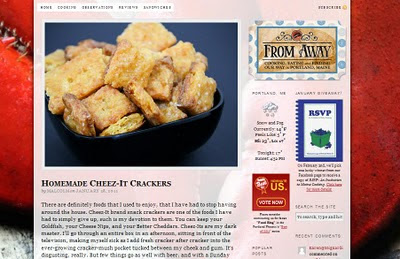
Adapted recipes, cooking, eating and observing from the relocated and loving it. From Away dedicates an entire section to sandwiches, a household passion, with crazy close ups your inner Dagwood will get lost in.
This is the “official” blog of Maine Food & Lifestyle, and its writers are advocates of regional cuisine and buying local. The MFL site and newsletter features cuisine-related highlights from all around the state, but the blog is strictly dishes – recipes of prime delish always with a local angle.
More visual documentary than reading material, this blog is penned and sanpped by a local Portland photographer. If you like to peruse original shots of food in its natural habitat and want to feel like you’re part of the local scene, DoDa! (so called) is your man.
This humbly titled blog has a photography focus. Think “Thirteen Ways of Looking at A Blackbird” as seen through the lens of someone hungry. Desserts, main dishes, breads…it’s all here.
Just a Taste…
Maine Blueberry Muffins – They had us at blueberry: the secret to a better blueberry muffin revealed.
10. Sweeter Salt
Our final entry, this inclusion is kind of irresistible. Local resident sweetersalt muses on the food and fashion life, while proclaiming a commitment to being anti-lettuce. She’s forgiven, due in large part to her zest for life and her ability to extol the virtues of banana smoothies and white tanks equally.
What Kind of Plaid is That? – Pure anecdote accompanied by a full length snap in tartan. Did I say this was irresistible?
Finally, while not a blog, the newsletter from the town’s authoritative food and book source Rabelais is a fantastic way to stay on top of local cuisine, cookbooks, food writing and local food events in the state and everywhere. Sign up directly on their site.
Got a favorite blog that speaks to your foodie side? We’re listening – post a comment!


 Live and eat in Maine or just love the state’s rich food culture? The Great Maine Food app, created for the iPad for Down East Magazine helps bring you and great local food together. The new app debuts with recipes, video tutorials, and menu planning for the Maine foodie, the foodie who enjoys a taste of Maine, or the foodie inside that might be aching to come out and, say, try some local steamers.




 Maine Comfort Food Uncovered