Growing Local: A Journey Through Maine & Its Food

Jennifer Mayo-Smith Talks to Wild About Health about Wild Blueberries, Sea Salt, and Maine’s Influential Role in Connecting Us with Our Food 

When Jennifer Smith-Mayo started paying attention to how much food is produced in Maine, she said she was astonished.  “You can find most anything that you need, from fresh greens to artichokes to berries and fruit to wheat and oats to free-range meat and bounty from the sea,” she said. Her close attention to local food led to discoveries about techniques used by local food producers, challenged her to eat food in season, and even influenced her own home farming techniques.

Wild blueberries were the inspiration for
a project and a personal journey.
Photo by Jennifer Smith-Mayo.

For example, by learning from Eliot Coleman and Barbara Damrosch from Four Season Farm in Harborside about extending the harvest season, she extended her own harvest well into December. “Their farm is a testament to how it is done,” she said. “Last year I had spinach ready for harvesting in April.” It was good, practical work that was ultimately in service to art. It became “Growing Local”, a two-part documentary series about local food in Maine.

The project uses still photography and audio interviews along with ambient sound to document traditional recipes and trace the origin of the ingredients through their sellers and producers. A selection of photography from the project will be shown during the month of March at the Barbara Kramer Gallery of Belfast Free Library.

A Tin of Wild Blueberry Muffins

The first part of the documentary series, “Growing Local: Wild Maine Blueberry Muffins,” was sparked by one of Maine’s beloved foods: wild blueberries. It was something as simple as making a tin of blueberry muffins that became the inspiration. They weren’t just any muffins – they were muffins made completely with Maine ingredients that were locally sourced. Northport resident Smith-Mayo had picked the blueberries from her own blueberry barren and acquired the other ingredients from her neighbors, or at the Blue Hill Co-op. The idea that she could have such a unique relationship with what created the muffins had an impact. She already had a passion for cooking and for local food, and she was intrigued with the idea of exploring the connection between us and the food we eat. It became both a project and a personal journey.

A professional photographer whose work has documented rural living, farming, and  fine dining, Smith-Mayo’s images of small town life in Maine have been featured often in Down East Magazine, among many other publications, and she recently co-authored Maine Icons: 50 Classic Symbols of the Pine Tree State with her husband, writer Matthew P. Mayo. Part of the goal of investigating food and its producers and sellers for “Growing Local” was to generate awareness of the importance of using local foods by taking traditional regional recipes and adapting them for use with only local ingredients. With wild blueberry muffins as the catalyst for this multi-faceted exploration, she turned muffin-making into a deeply engaged cultural act: for “Growing Local: Wild Maine Blueberry Muffins,” she met the ingredients’ producers, learned about the recipe’s history and explored the effect that supporting producers has on the economy.

Maine’s Food & Farming Renaissance 

While iconic foods like lobsters, wild blueberries and potatoes are commonly embraced, that’s just the beginning of Maine’s role as a leader in the local food initiative, said the author and photographer. “It starts with something that most practical Mainers have done for centuries: raising veggies in their vegetable gardens,” she said. “You know spring has arrived when talk at the general store borders on frenzy about wet weather and trying to get the peas in.”

Smith-Mayo cites the increase in farms in Maine, the overwhelming amount of which are small farms, and the burgeoning number of winter and summer farmer’s markets as indications of the state’s renaissance in farming. She also gives a credit to Maine chefs and their notable restaurants, using Primo in Rockland and Chase’s Daily in Belfast as two fine examples of restaurants that grow some of the food that appears on their menus.

Documentarian Jennifer Smith-Mayo and Nessie.
Photo by Matthew P. Mayo.

Our connection to food is particularly strong in Maine, Smith-Mayo said, and is strengthened by the improved transparency in our local grocery stores and markets like the Belfast Co-op. “Signs and labels that declare where the food was grown, where it was processed, are critical in making food-buying choices,” she said.  “I look for those signs – if one bag of apples is from Argentina and the one next to it is from Maine, I buy the Maine apples. Nothing against the growers from Argentina, I just prefer to support our local community whenever I can.” She also references The Maine Department of Agriculture’s “Get Real, Get Maine” program, a successful Farm to School program, and the Seniors’ Farmer’s Market Nutrition Program, which provides Maine senior citizens with locally produced food, as initiatives that have put Maine ahead of the pack when it comes to local, healthy, real food initiatives.

That natural connection to food was all part of what prompted her to dig deeper for the project. She wanted to learn the back-story of local food – to understand the process of producing maple syrup, to learn about who grew and milled the wheat into flour in Aroostook, and to see what was involved in creating Maine Sea Salt (hint: add a little sun). We can benefit from her journey through Maine and its food by viewing a selection of photographs from “Growing Local: Wild Maine Blueberry Muffins” this month. The full Growing Local project will include an enhanced e-book and DVD and it will be avail able in the fall.

Find our more about Jennifer Smith-Mayo and Growing Local Exhibit at www.jennifersmithmayo.com.

Pinterest Shows Its True Blue Colors

A view of the many Pinterest boards devoted to blueberries and wild blueberries. The new social sharing site puts enthusiasts’ passions on display. 

Whether you’re keeping tabs on the latest social media trends, or you’re an old-school scrapbooker, Pinterest is probably piquing your interest. Suddenly, this social sharing site is the talk of the digital town, and in the race to create personal “boards”, a true diversity of user interests has appeared.

Pinterest mimics a traditional pin board, letting you virtually “pin” favorite images, photos and recipes from around the digital world on your own “board”, peruse other boards, and find new discoveries to pin. It’s addictive, social fun for image-friendly topics like food, style, weddings and decor.

Though boards are widely diverse,  it’s clear that many Pinterest users have a yen for a little blue fruit. These enthusiasts for blue are not shy about sharing their passion. Blueberry boards – many dedicated specifically to wild – are teeming with blueberry images, blueberry-themed food, recipes and personal photos. The result is an array of boards such as the Everything Blueberry board, the Food Blueberry board, boards devote solely to blueberry breads, blueberry cakes and simply blueberry obsession (think blueberry cake times 100.) It’s more than enough to sate a hunger for a very photogenic berry.

Blueberry Pinterest Finds 

Seeking some bright blue ideas to stimulate your meal? On Pinterest you can find the creative, the practical, and truly mouth-watering. Here are just a few of our own blueberry finds – that is, images – suitable for our own wild blueberry board, along with the original source that inspired the Pinterest user to pin.

The Find: Blue Velvet Cake with Blueberries & Cream Cheese Frosting
The Source: Adventures in Cooking Blog
The sight of this true blue velvet cake will have you reeling with pleasure. It’s breath-taking blue piled high with white frosting (Sold? Print the recipe for this exquisite creation).

The Find: Blueberry Ice Cubes
The Source: We Are Not Martha
Inspiration doesn’t have to be complicated. This super simple superfruit recipe is perfect for a fun drink when you feel like giving blueberries a nod. We Are Not Martha takes you through the ice cube making process on this “favorite things” page, photographing each simple step along the way, the true indication of pin royalty. Here’s a preview:

1) Place 3-4 wild blueberries in an ice cube tray
2) Fill with water
3) Freeze
4) Use in sparking water, lemonade or your favorite cocktail.
5) Enjoy!

The Find: Blueberry French Toast Sandwich
The Source: Blue Willow (a “duochromatic blog” about only things that are white and blue)

This pinable Blueberry French Toast Sandwich adroitly bridges the gap between breakfast and lunch. It’s touted for its winning taste, and such a pin-worthy image has to taste good. Here’s the ingredients:

Package of cream cheese, softened
Some confectioners sugar
French toast slices
3/4 cup fresh (or go for nutrient-rich wild frozen) blueberries

From there, you are merely a mix, a toast and a spread away from yummy.

The Find: Blueberry Pop Tarts
The Source: Food Coma
It’s the homemade equivalent of the beloved family favorite. It’s hard to avert your eyes from this perfectly sweet manifestation of blueberry pop-tarts made fresh at home. The pin-worthy trick is puff pastry filled blueberry and topped with a sugary frosting. Pintastic!

Create Your Own ____ Board

Think you know wild blues? Show your colors! Create your own wild blueberry board – or fruit board, veggie board, healthy eating board, antioxidant food board, or anything full of nutritious, imagistic inspiration.

Making your own Pinterest board is easy. Start here. Request an invitation. (Yes, there’s a waiting list to this exclusive party.) Then, get to work on your own creation and share it, or browse other boards for likely additions and inspirations.

Maine Author Teaches Benefits of Wild Blueberries

Gail J. VanWart and Blae at Peaked Mountain Farm.

There’s something about being a Maine wild blueberry farmer that makes you want to spread the word about the unique fruit to which you have devoted your life. That’s just the way it is with Gail J. VanWart.

Her most recent book gets the word out in the form of a children’s book. It’s called Ellery Didn’t Know That, a charming story about a bear’s adventures searching for wild blueberries. The tale tells of Ellery Bear, an adventurous, amiable creature who pays a visit to a Maine family and in doing so, sends the very worthy message to young readers that Maine lowbush wild blueberries are a natural, native fruit rich in attributes.

VanWart lives in Dedham, Maine on Peaked Mountain Farm, where she maintains the native Wild Blueberry fields as a proud fourth generation steward. The author and publisher named her main character “Ellery” for her grandfather who lived and cared for the Dedham Farm before her. The book sends a perfectly delicious and healthy message with a delightfully furry messenger to help send it.

VanWart’s previous book, Life Raked In is a collection of poems, recipes and thoughts on life inspired by the Wild Blueberry fields on the family farm. She is a self-proclaimed huge wild blueberry fan, dedicated to spreading the word about wild and the wild lifestyle. (You can buy the book and see her appearance on Good Day Maine).

Gail VanWart’s Mid-Winter Treat: Wild Blueberry Gingerbread

VanWart was kind enough to share a favorite recipe with Wild About Health from Life Raked In. Her Wild Blueberry Gingerbread is an ideal mid-winter treat that uses frozen wild blueberries to achieve gingerbread nirvana. Enjoy!

Gail’s Wild Blueberry Gingerbread

2 cups flour
½ cup shortening
½ t. salt
1 cup sugar
1 egg
½ t. ginger
1 t. cinnamon
1 t baking soda
3 T. molasses
1 cup sour milk*
1 cup Wild Blueberries (fresh or frozen)

3 T. sugar
to sprinkle on top before baking

Confectioner’s Sugar
to sprinkle on top after baking

½ cup fresh Wild Blueberries
for garnish, if available

Cream shortening and add salt and sugar gradually. Add unbeaten egg and beat until light and fluffy. In separate bowl, mix flour, ginger, and cinnamon. In another bowl, mix baking soda with sour milk, stir until soda is dissolved. Then add dry ingredients and sour milk mixture alternately to the creamed mixture. Add the molasses and fold in the cup of Wild Blueberries. Turn into a greased and floured pan (either a 9” x 9” square or 10” round pan works well). Sprinkle top with 3 tablespoons sugar and bake at 350 degrees for 45-60 minutes. When done, turn onto rack to cool. When cool, place on a plate and sprinkle with confectioner’s sugar and garnish with fresh blueberries.

*If you don’t have sour milk on hand, add 2 tablespoons vinegar to one cup of whole milk.  

Health.com Cites Wild Blueberries as Pick for Winter

Buy ’em frozen! Wild blueberries rescue
winter nutrition, says Health.com.

It’s a set-in-stone rule for cold-weather eating: fruit can rescue good nutrition in the winter months. We often don’t get the fruit requirements we need when the mercury drops, but frozen makes our favorite fruits available and as nutritious as fresh (if not more, due to being quick-frozen at their peak). So why are we ducking our daily requirements? There should be no excuses.

Health.com lays out the best winter fruits, and starts their list with powerful wild blueberries, urging readers to “Buy ’em: Frozen” and touting the nutritional and economic virtues of the small, wild fruit.

From Health.com’s How to Get Your Favorite Fruits in Winter:

“Frozen blueberries are typically the petite wild version, which have been found by scientists to contain more disease-thwarting antioxidants than their traditionally cultivated counterparts (the type you’re most likely to find fresh right now). Also, fresh blueberries are pricey in winter and, if trucked in from afar, can go moldy fast.”

The article also cites wild blueberries as one of the best superfoods for weight loss, and no wonder: a 1-cup serving is just 80 calories, and provides 4 grams of fiber for helping you feel full – a perfect food to help you keep your New Year’s resolution. 

Get ’em frozen indeed! Well done, Health.com!

Brainy, Skinny & Big on Blue: The Year’s Top 10 Wild About Health Blog Posts

What was your health and nutrition obsession in 2011? For many it was all about food synergy, while others preferred to focus on the harvest. This year’s most popular posts span the food and color spectrum – here’s a look at what you liked most at Wild About Health this year. They may be worth a second read in 2012!

Your Top 10 Posts of 2011 

1. Infatuated with Food in Maine? 
This post features the 10 Best Local Bloggers in the local world of eating from those who cover the Portland culinary scene to avid home cooks who love to share their creations.

2. Food Synergy: Nature’s Meal Plan?
One plus one is more than two. This post focuses on the mysterious world of synergy: food combinations that work together to provide more powerful health benefits.

3. At Blueberry Harvest Time, Picking at Peak Means an Endless Summer
This go-to post from 2010, revisited this year, breaks down the tradition and technology of farming wild blueberries and why this little blue fruit is the pride of Down East Maine and Nova Scotia.

4. You Can Trust Allison Fishman
The author of You Can Trust a Skinny Cook talked exclusively to Wild About Health this year and shared her “skinny” story, her tips, and a delicious recipe.

5. First Spring Look: Maine’s Wild Blueberry Barrens 
This year, it was just like being there. Geoff Leighton shares his photos from an off-season trip to the barrens when things are just starting to happen in the land of wild blueberries.

6. New! Harvest Pics From Down East Maine’s Wild Blueberry Barrens 
2011 was all about the blue: these up-to-the-moment pics show the wild blueberry barrens, the post-harvest processing, even a peek at rake-making.

7. Can You Clean Your Brain? New Research Shows Berries Can Eliminate Brain “Debris” 
New research was a boon for the brain, and berries are big winners when it comes to brain “clutter”.

8. Frozen Fruit Myths…Debunked! These myths about frozen include straight talk about the nutrition and performance of fantastic frozen fruit.

9. Skin Superfoods: Eating Rx for Your Largest Organ
Beautiful skin isn’t just about genetics—it’s about what you put on your plate, and these foods beautify inside and out.

10. ORAC: What is This Nutritional Buzzword?
This post provides the basics of a need-to-know nutritional term created to determine the antioxidant power in foods, an important measurement for health and disease prevention.

Here’s to more healthy and nutritious reading in 2012!

12 Wild Days of Blues Countdown Starts Today!

We’re counting down the holidays with 12 days of pure blue!

By highlighting a wild blueberry, blueberry, or super healthy fruit-related holiday item every day until December 24th, we’re providing plenty of ways to have a Blue Christmas, Chanukah or any day that celebrates the season.

Grab the sleigh reins, Santa, because off we go!

Day 12: Winterport Winery’s Blueberry Wine

Winterport Winery a Maine winery/business located in Winterport (that’s a bit north of Bucksport) has a mouth-watering fruit wine selection that’s fitting for tasting, coiffing, or giving. They offer a selection of award-winning fruit wines with the added charm of being a family business started by owner and winemaker Michael Anderson. They specialize in wines that slant toward indigenous offerings, such as apple and blueberry flavors.

And, their interest in combining wine with food is evident in their establishment of Pairings, a joint venture with Penobscot Bay Brewery (the brewery can be found on-site) where they spread the knowledge of pairing food with wine and beer through educational seminars and tastings around the state.

Their fruit-forward choices make perfect home-grown hostess gifts for the holidays, or something special to share when the bustling is done. You might try a Sparkling Apricot Wine when you want something effervescent, or indulge in Berry Chocolate, a raspberry-blueberry wine with a velvety chocolate finish.

Our choice to kick off 12 Wild Days of Blues: Blueberry Wine (Dry). It’s one of two blueberry wines offered by the winery. This one has a cherry red color and is dry but smooth, and pairs wonderfully with a rich chicken or ham dish, pasta, or a selection of mild cheeses.

Find Winterport Wines at many local merchants, or, depending on your location, have them shipped to you or a lucky gift recipient.

The 12 Days of Blues Countdown – You Can Help! How will wild blueberries and good fruit health be part of your holiday season? Let us know and you could be part of our 12 Days of Blues Countdown to the Holidays. All you need is a great idea for how something a little bit wild and a little bit blue – whether it’s a gift idea, recipe, or any holiday inspiration – will play a part in of your holiday celebration. Then, let us know about it at editor@wildblueberries.com.

Top Montreal Chef Makes a French Connection with a Wild Ingredient

Chef Jérôme Ferrer is a Montreal chef with a flair for creative, delicious food and a talent for distinctive use of market fresh produce. As Grand Chef at the celebrated Restaurant Europea, a true hot spot of creative, modern cuisine located in a luxurious Victoria Mansion in the heart of the city, Ferrer and his staff of 22 chefs can be found fixing up dishes on the famed menu that provide some of the best edible evidence that food can be turned into art.

The Wild Blueberry Association was fortunate enough to procure Chef Ferrer for some exclusive creations using the beloved wild blueberry as his primary ingredient. The results speak for themselves – they are part of a winning selection of brand new recipes on www.wildblueberries.com.

Want a taste? Chef Ferrer’s distinctive Foie Gras Cutlets with Wild Blueberry Sauce features a generous helping of wild blueberries, along with puréed parsnips and seared foie gras cutlets. His inspired Lamb Bites with Celeriac Bulb & Wild Blueberry Sauce uses the unique flavor of celery root (he transforms it into “fries”, sautés and seasons it) along with the perfect accompaniment: he reduces wild blueberries with lamb stock and wine to create the sauce. Fantastique!

What’s this French chef’s wild blueberry connection? It’s based in part on wild blueberries being a popular indigenous Canadian crop. Lowbush blueberries are harvested only in Maine and Eastern Canada, meaning the versatile ingredient is right at home in Montreal. It’s also a match made in heaven for a chef who specializes in haute French cuisine. French cooking is known for its sweet indulgences – think crème brûlée, parfaits, sorbets, petit fours and marcarons – and the sweet, complex flavor of wild blueberries fits the bill. Ferrer is an expert on the subject – he is the author of Les Secret des Desserts, which reveals his insider info on creating delectable French-themed desserts. One of those strictly-on-the-QT tips? Create your confection using fresh produce and the best local products.

The creative use of wild blueberries is a particularly perfect fit for the Wild Blueberry kitchen due to Chef Ferrer’s dedication to a “from the market” menu at Europea. His efforts to serve food retrieved daily from fresh local providers is clear from his menu. He provides his signature je ne sais quoi to Quebec-raised veal, Appalachian Coast venison, and dishes such as Lobster Cappuccino Truffles, and North Coast Scallop Crèpes.

The Wild Blueberry Association consistently works with renowned chefs in order to develop original recipes that combine the creative ideas with the unparalleled taste and nutrition of wild blueberries. You can enjoy more of the European influence in Wild Blueberries à la Crème Brûlée, a blue take on a traditional French classic, and in Warm Wild Blueberry Petit Fours, a breakfast-inspired interpretation of a fave French treat from the Executive Chef of Kennebunkport’s White Barn Inn, Jonathan Cartwright. In light of all the palate-delighting options, only two words come to mind: Bon appétit! 

Discover more new additions to our recipe section! Explore delicious, antioxidant-rich entrée, dessert, snack, and drink options such as Duck, Spinach & Goat Cheese Salad with Savory Wild Blueberry Sauce, Wild Blueberry Clafoutis and Rabbit Stew.

Maine Chef Competition Spotlights Farm-to-Table

Harvest on the Harbor, the annual food and wine event that takes place right smack on the harbor in Portland, Maine, is putting the farm-to-table movement in the spotlight by searching out the best farm-to-table chef in this fall’s aptly named “Top of the Crop” competition.

An extraordinary crop of local chefs have been chosen for their best practices in adopting the farm-to-table concept, and they’ll put their talents on the line for a panel of judges that will make the call of who best represents the farm-to-table movement.

The Top of the Crop competition will sound familiar to any cooking show aficionado: chefs on the chopping block will use fresh, organic ingredients and will be required to use one predetermined ingredient, just to make it interesting. The final three competitors will be chosen by the judges from a list of fourteen, and a fourth will be chosen through a “people’s choice” competition being conducted online. (Voting opened August 19 and will close September 12 – get involved by voting for your favorite.)

Farm-to-Table: Connecting Consumers with Growers

Top of the Crop is a perfect culinary show-down in a state that always gets a mention when the farm-to-table movement is part of the conversation. Farm-to-table, now recognized as a true movement in the world of chefs and home cooks, gets local food providers and small farmers involved in the process of creating food and delivering it to consumers. The movement is meant to support the sustainable, local food community, and farm-to-table chefs use seasonal, local food as much as possible at their restaurants.

Delivering locally-sourced meals means connecting people to what they eat and to the people who grow what they eat, in addition to supporting local communities, and, very often, health. Local food is fresh, making it nutrient-rich, and it is chosen on the basis of being free of harmful chemicals. And, this food movement is about more than just fruits and vegetables. Locally, naturally raised cattle, lamb, pig and chicken, artisan cheese, bread, and other foods such as mushrooms and eggs, all collude to make farm-to-table meals.

Farm-to-table eating has become a recent trend, but it’s Alice Waters who is credited as an originator with Chez Panisse, her farm-to-table business in California. Since then, the number of farm-to-table restaurants has grown, and today, restaurateurs pride themselves on their ability to offer consumers food from a kitchen with farm-to-table ideals. Now, many establishments offer entire meals sourced locally including making bread in-house, and freshly picking vegetables daily – even the mayonnaise that goes on the sandwiches can be made in-house with local ingredients.

Maine Moves Farm-to-Table Forward

In Maine, the movement is growing, thanks to the opportunities the state offers: great seafood, naturally raised meats, small farms that offer poultry, cheeses, eggs and produce, and plenty of indigenous offerings like wild blueberries. The movement received a push from early adopters such as local James Beard Award winners Mark Gairer and Clark Frasier from Arrows Restaurant in Ogunquit – the two will host the Top of the Crop event – and the number of restaurants committed to using locally-sourced foods has grown.

While some restaurants use local foods exclusively and even have their own gardens, many put local fish meat and produce straight from area fisherman and farmers on the menu as often as they deem possible. Cinque Terre in Portland, for example, has received national attention as a Maine restaurant known for its farm-to-table practices. The restaurant’s own garden supplies it, and 80% of its ingredients are grown on-premises. (They even make their own cheese and smoke meats.)

For those who love competitive cooking, Harvest on the Harbor will also host the Lobster Chef of the Year Competition where chefs show off the ultimate in lobster creativity. Attendees can also enjoy events such as The Ultimate Seafood Splash! where Maine’s top chefs and fishermen prepare seafood from coastal Maine. On top of it all, attendees take part in tastings and sample a profusion of locally grown foods, food artisans, wines and brews, and Maine-made products – it’s truly a foodie wonderland.

Harvest on the Harbor is being held October 20-22, 2011 in Portland, Maine.

Quite Contrary: Green Roofs Take Gardens to the Heights

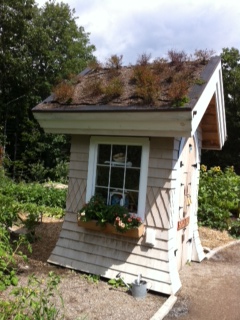
At the Coastal Maine Botanical Gardens in Boothbay Harbor, you can find plenty of lowbush blueberries in surprising places, but no more surprising than on this small-scale living roof. They’ve planted these blues up high – not to keep them from enthusiastic pickers (these “burgundy” blueberries are primarily ornamental) but to put the marriage of horticulture and architecture on display.

A “living roof ” grows lowbush blueberries at Coastal Maine
Botanical Gardens in Boothbay Harbor, Maine.

Green, or living, roofs are becoming more and more popular as ecological architects seek ways to build sustainably, and vegetation that completely covers a building’s roof benefits air quality, conserves energy, reduces stormwater runoff and helps lessen the “urban heat island effect” in cities in which traditional roofs absorb the sun’s heat during the day then radiate it back a night.  Chicago has been a leader in green roofs and rooftop gardens in the U.S., and in Canada, Toronto approved a by-law in 2009 that mandated green roofs on residential and industrial buildings.

Of course, a true green roof – a roof covered mostly or completely with vegetation planted over a waterproofing membrane – differs from a rooftop garden, which consists of various container plantings on a roof or deck surface. However, some more intensive roof gardens are planted into soil that covers the roof. It’s an exciting way add beauty to an environment: planting a diversity of flowers and shrubs can add amazing color and some desired “green space” to an urban community.

We are likely to encounter fewer true green roofs in the Northeast, but they exist. In fact, students at the University of Delaware found that growing a garden on the roof of their college buildings had many advantages, and they hope their idea will take off. Plants on the roof had a cooling effect in the summer, and caused the peak temperature on the roof to occur later in the day, making classroom temperatures more comfortable and lessening the need for air conditioning.

If you are considering a roof garden, either for aesthetic, sustainable, or gastronomic reasons, choose durable plants that grow year-round and require little attention beyond occasional weeding, and be aware of safety issues associated with weight and weight distribution. While not all your edibles will work well up on the roof, things like herbs, snow peas, and greens like spinach and bok choy can thrive if your roof has a seasonal focus.

You can find out more about roof gardens at The Kitchn, and Boston.com shows you how to start your own rooftop veggie garden.

New! Harvest Pics From Down East Maine’s Wild Blueberry Barrens

Plus: What To Do With All That Blue?

Awash in blue! In August, wild blueberry harvest season brings hundreds of workers to the fields, a sight that can only be witnessed in this region of the country. Washington County is home to half of Maine’s commercially harvested fields, and photographer/videographer Geoff Leighton was there for a first-hand look at the action.  

Agricultural and nutritional researchers know a good thing when they see it. Capitalizing on a nutritional powerhouse like the blueberry means backing the right horse when it comes to delicious foods that provide high concentrations of healthy, disease preventing antioxidants.

But while some researchers are busy traveling to South America to seek alternatives to high-bush or so-called “grocery store” blueberries that have higher concentrations of antioxidants to fight cancer and heart disease, they neglect to mention that right here, in Maine and Canada, alternatives already exist. Wild, low-bush blueberries have the highest antioxidant capacity per serving, compared with more than 20 other fruits, including high bush blues, and they are right here in the states, being harvested by the billions of pounds every August.

Not only do we have access to these highly concentrated healthy fruits, we can see their evolution first hand. If you are assessing the source of your meal as part of understanding what on your plate is a cowboy and what is an alien, with wild blueberries, it’s easy to trace. August is wild blueberry harvest season, a time when berries cover the barrens in blue, and the race is on to pick, rake, and mechanically harvest every last one so they can provide us with their nutritional properties and sweet, tangy, complex tastes all year.

We talk about the unique qualities of the wild blueberry all the time, but a picture is worth a thousand words. Thanks to Geoff Leighton of Leighton Images, we can eavesdrop on what’s happening in the glorious, bountiful world of the wild blueberry right now, when the harvest is on.

A raker works the field in Deblois, Maine. Hand rakers are often dispatched to work the rocky or steep terrain, and for their efforts are paid by the  pound or by the box. The fields are usually wiped clean by mid-August.
Most  farmers rely heavily on mechanized harvesting. Once a field is free of  rocks, if farmers are lucky enough to have level ground, mechanized harvesting is more efficient and environmentally sound.
 
Rake-making at The Hubbard Rake Co. in Jonesport, Maine. Owner Ike Hubbard is responsible for re-inventing the blueberry rake. Rakes are now available in many styles, including two-handled rakes, long handled rakes for raking upright, and small models for backpackers.
Farmers harvest half their fields every year while the other half is managed to encourage vegetative growth.  For a farmer with  3-4 acres of land, it would not be unusual to harvest 10 thousand pounds during the month of August.
Workers on the line at Merrill Wild Blueberries in Ellsworth, Maine.  Up to 20,000 pounds of wild blueberries per hour can pass through processing lines like this one during harvest.

Use Your Blues

While most wild blueberries are frozen immediately after harvesting using IQF technology to preserve all the taste and nutrition, you are certain to find pints fresh from the field at local stores and farmer’s markets.

What to do with all that blue?

Desserts? Pies? Cakes? You bet. But nothing’s off limits when it comes to blues. Canadian food columnist, Chef Dez reminds us that blueberries shine with meats such as steak, beef or lamb – their bold flavor stands up well as a sauce or jam accompaniment. Blueberries also add sweetness to vinegar, making them perfect for salads, and add a mellowing complex flavor. Chef Dez says, try this at home: take a handful of blueberries, wash and dry them, and toss with a teaspoon of balsamic and a sprinkle of sugar, if desired. Perfection!

That being said, it’s Endless Simmer that gets the wild blue ribbon for assembling 100 of the best ways to use blueberries (make sure to use wild for best taste and nutritional intensity). They outdid themselves by searching the blogosphere for the most deliciously conceivable ways to take advantage of the season. Choose from cocktails and chicken, honey ice cream, almond smoothies, blueberry mint ice cream sandwiches, marshmallow crisps, sauces and jellos. Endless Simmer, you get a Big Blue Bravo!