Guest blogger Marnely Rodriguez-Murray from Cooking with Books shares her recipe.
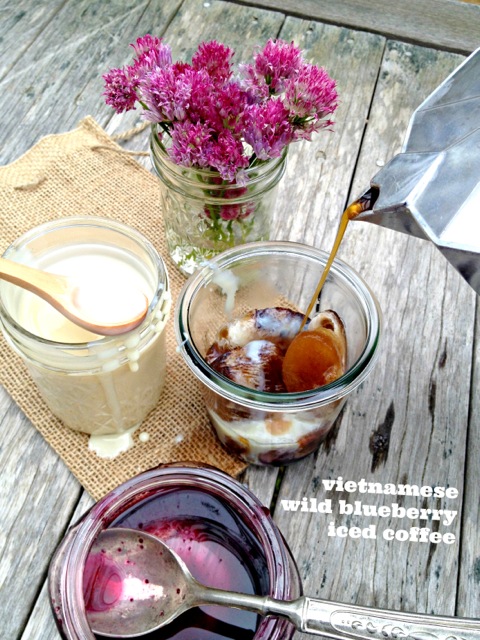
How do you know when summer starts in your neck of the woods? For us it’s when we start sipping on iced coffees! But the classic iced coffee is boring to me, watered down and not as tasty as this Vietnamese Wild Blueberry Iced Coffee Recipe that we’re sharing today! Now, before you start asking about wild blueberry iced coffee, let me ask you: have you ever tasted blueberry coffee beans? Those artificially flavored coffee beans are the one way to ruin good coffee, so I’m not doing that to you. We’re making a wild blueberry & cardamom syrup to complement our espresso coffee ice cubes, sweet condensed milk, and fresh espresso.
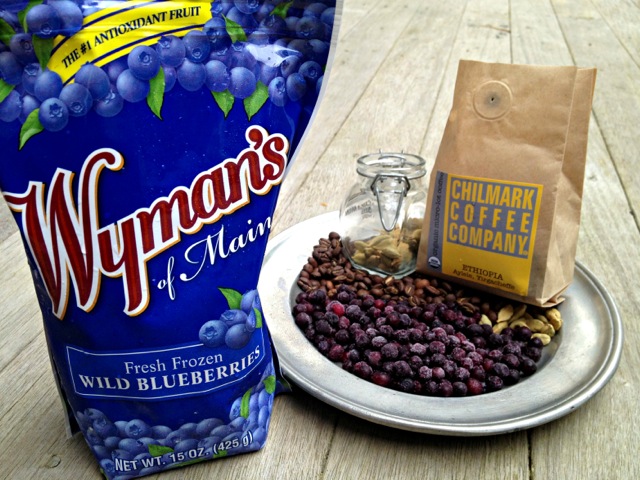
Wild Blueberries. All blueberries are not alike! Wild Blueberries are the little ones that have grow naturally in the fields and barrens of Maine and eastern Canada for 10,000 years. One of North America’s native berries, Wild Blueberries are lowbush varieties that are never planted and are harvested commercially only in this special place. The crazy thing is, that having grown up in the caribbean island of the Dominican Republic, I had never tasted a fresh blueberry until probably 5 years ago! So now, not only do I stock up on fresh berries, but after learning about wild blueberries, we’re stocking up with bags of the frozen wild blueberries as well!
Iced Coffee. The start of summer, the most refreshing part is always having a chilled drink to sip on. Preparation is key with this iced coffee since you have to make espresso ice cubes to serve your drink in. It provides an extra dose of caffeine as well as avoids your drink from watering down. Support a local coffee roaster in your area – here we used Chilmark Coffee Company, a local and awesome coffee roasted here on Martha’s Vineyard.
When making any recipe, as simple as it may be, please use the best ingredients you can find. Not only because the best ingredients will result in the best recipes, but health-wise as well! Using ingredients like wild blueberries, the leaders in antioxidant capacity; They are rich in anthocyanin, which has powerful antioxidant and anti-inflammatory capacity. Don’t you just love when you sip on a delicious drink knowing it’s also good for your health?!
Inspired by Cooking Light’s latest cookbook “Chill”, the addition of condensed milk & cardamom came into play. “The viscous consistency of sweetened condensed milk gives smoothies and ice creams [and iced coffees!] a luxurious mouthfeel and prevents gritty crystallization from occurring.” – Cooking Light. And the cardamom? It brings a warm, spicy aroma to the wild blueberry syrup, perfect pairing to fresh espresso.
Wild Blueberry and Cardamom Syrup
Yield: 1 cup
A delicious and flavorful syrup with wild blueberries as the star ingredient!
Ingredients
1 cup water
1 cup raw sugar
1 cup frozen wild blueberries
1 tablespoon green cardamom pods, crushed
Instructions
1.Over medium heat in a small sauce pan, simmer the water, sugar, wild blueberries, and cardamom pods for 5 minutes. After the mixture comes to a slow boil, turn down the heat to low and slowly reduce to half, about 15 minutes.
To make Vietnamese Wild Blueberry Iced Coffee: two hours before serving, brew espresso or coffee with your favorite method and pour into ice trays. Freeze until solid. When ready to serve, place a few coffee ice cubes in a glass, drizzle with wild blueberry & cardamom syrup, sweeten with condensed milk, and top with fresh espresso that has been chilled.
Recently, Wild Blueberries partnered with Cooking Light Magazine to help launch its new cookbook Chill: Smoothies, Slushes, Shakes, Juices,Drinks & Ices, a collection of delicious recipes to beat the summer heat, including awesome recipes using wild blueberries like: Blueberry-Ginger Juice, Blueberry-Pomegranate Smoothie, and one I must try ASAP: Blueberry Power Smoothie, blended with tofu and yogurt, for a protein packed drink!
Disclosure: This is a sponsored post on behalf of Wild Blueberries, but as always, my love for wild blueberries and coffee are 100% my own.
For today’s post, Hannah Kaminsky of BitterSweet shares a delicious summer recipe with us using Wild Blueberries.
I’ve been feeling blue lately… And rather happy about that! Blueberries are abundant once again and my appetite for the sweet, mildly tart and tangy berries is insatiable. For as many punnets as I plow through, my cravings remain unsatisfied. Even as we reach the peak of growing season, the produce on offer left something to be desired. The solution turned out to be just a few steps away, hidden in plain sight. A more intense blueberry experience lay not in the produce aisle, but the freezer case. Frozen Wild Blueberries, grown in Maine and Canada but available worldwide and year-round, are a whole lot more special than you may realize.
Oh sure, frozen Wild Blueberries boast considerable nutritional advantages over conventional, cultivated varieties, such as an unbeatable antioxidant levels just for starters, but that’s not what first lured me over to the wild side. It’s all about the flavor, and they sure do pack a giant punch of it into such tiny packages. That means that you’re getting about twice as many berries per cup, each with less water and more concentrated sweetness than fresh. For a baker concerned about runny pie filling or “bleeding” muffins, such a vast advantage over the competition is invaluable.
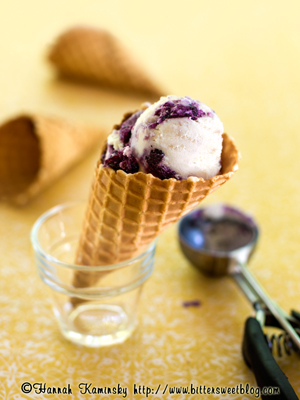
Consider the sudden an unpredictable heatwaves rippling through the east coast lately, my thoughts were focused squarely on cooler, more refreshing treats. Referring back to Vegan a la Mode for inspiration, cheesecake sounded like a luscious pairing that would best highlight these indigo gems. Bumping up the intensity with a bold pop of citrus, lemon zest turned the simple flavor pairing into a legitimate flavor party. Enjoying a slowly melting scoop in a fresh waffle cone, the jam-like Wild Blueberry swirl shaking up the creamy confection with the periodically bite of a whole berry, it was exactly the summer-loving taste I had been missing.
And yet, that still wasn’t enough. What could possibly take this simple, sweet delight to the next level of dessert perfection?
How about sandwiching it between two thick squares of graham cracker cookie bars, adding more cheesecake character back into the equation while incidentally creating more portable treats? Yeah, that might finally do the trick.
If you should find yourself at a loss for how to dress up your very own frozen Wild Blueberries, and are hungry for a slightly less indulgent sort of refreshment, a good place to turn is Cooking Light’s latest cookbook, Chill: Smoothies, Slushes, Shakes, Juices, Drinks & Ices. Though not a specifically vegan cookbook, most of the recipes are “accidentally” vegan, and all the rest easily veganizable.
This post was written for and is sponsored by Wild Blueberries, but all content and opinions are entirely my own.
Following the New York City launch, we had an opportunity to sit down with two of the Cooking Light Chillteam — Shaun Chavis, Foods Editor at Oxmoor House and Editor of Cooking Light Chill, and Allison Fishman Task, author of You Can Trust a Skinny Cook and spokesperson for Chill. They were a great tag team for our interview, sharing some wonderful information about how this new cookbook came to be, a favorite recipe or two, and why Wild Blueberries should become everyone’s “frozen” pantry staple.
Shaun Chavis shared with us the inspiration behind Cooking Light Chill.
How did the idea for Chill come about? Why a cookbook with recipes for healthy smoothies, slushes, shakes and juices?
SC:One of the things Cooking Light does so well is to show people how to enjoy all the foods they love in healthful ways. So many Americans now turn to beverages for health — juices for a health boost any time of day, and smoothies for a quick portable meal, especially for breakfast. The challenge is that many commercial, drive-thru drinks are oversized and overloaded with calories. We wanted to give people recipes for smoothies and juices they can make that can be part of a healthy diet. Another reason we did Chill,is with summer approaching, we all have nostalgic memories for creamy shakes, drive- thru slushes, snow cones, and other cool treats. Again, a lot of what’s out there is oversized and overloaded with calories and sugar and fat, and offers no nutritive value. The recipes we did in Chill use real fruit and veggies, and every recipe meets the nutrition standards you see in the magazine every month. Dietitians and health advocates are telling people to think about what they drink — that drink calories count, too— and this book gives you recipes for healthy, delicious drinks and ices.
What makes this compilation of smoothie/summer beverage recipes so special?
SC: Several things! 1) We didn’t want people to need to buy special equipment before they could try the recipes. Every drink can be made in a regular kitchen blender. You don’t need a juicer or an expensive specialty blender. And, most of the recipes in the ices chapter require only a baking dish and a fork. 2) A lot of people need or want dairy-free recipes, so as we tested recipes that have dairy in them, we also tested non-dairy versions. You can always substitute in your favorite dairy-free products, but we tested to see which ones gave the best taste and texture, so what you see in the recipes are our recommendations. There are more than 80 dairy-free options in Chill, so no one has to feel left out or forgotten! 3) This book is the perfect inspiration to get you out of a smoothie or juicing rut. We wanted all the ingredients to be easy to find in a neighborhood grocery store, but that said, we found a lot to play with. Lots of sweet juicy fruits like Wild Blueberries… herbs like basil, mint, lemongrass, ginger… veggies… nuts and nut butters. We also had fun dressing up drinks with garnishes like crushed cookies and toasted marshmallows.
Where can you purchase Chill?
SC:At your favorite bookstores like Barnes & Noble and on Amazon.
Allison Fishman Task, author of You Can Trust a Skinny Cook and spokesperson for Chill, shared with us her favorite smoothie recipe and how she selects her ingredients for what she calls her ‘frozen” pantry staples. She also suggests why smoothies are a great addition to any healthy diet – young or old.
What’s one of your favorite recipes in Cooking Light Chill?
AFT: One of my favorite recipes is the Wild Blueberry Pomegranate Smoothie. All it takes is four ingredients that you place in a blender: 2 Cups frozen Wild Blueberries, 1 Cup chilled Pomegranate Juice, a tablespoon of honey and a container of fat-free yogurt. What you’ve got is a refreshing smoothie that’s high in protein and antioxidants. It also has a good tart flavor which l love and that little bit of honey sweetness to take the edge off.
Watch Allison Fishman Task make this recipe in the below video. The recipe for this Wild Blueberry Pomegranate Smoothie can be found on page 33 of Cooking Light Chill.
How do you select your Smoothie ingredients?
AFT:When it comes to fruit for my smoothies, I always have Wild Blueberries on hand as a key ingredient. In fact, for smoothies, I prefer frozen Wild Blueberries over fresh because they are already frozen and I don’t have to use ice. I prefer the texture of a smoothie without ice. With frozen Wild Blueberries I have freeze and fruit all in one.
Frozen Wild Blueberries are a great “pantry” ingredient when you extend the idea of the pantry to the freezer. My freezer is definitely like my second pantry. And, there are a number of ingredients that live in my freezer all the time including Wild Blueberries, baby peas, extra butter, nuts and seeds.
Are Smoothies a great way to get kids eating more fruits and vegetables?
AFT: When feeding children, I subscribe to the European approach of feeding fruits and vegetables. That means I don’t start them with sugary processed foods like cereal but start them with actual natural fruits and vegetables. I don’t want their first bite of food to be processed food, but natural food and nothing can be more natural than Wild Blueberries.
However, if you are in a situation where you need to hide fruits and vegetables in food to get children eating more of the good stuff, smoothies are a great way to do it. In some cases, children may not necessarily be resistant to the flavors of the new fruits and vegetables but to the texture. Smoothies are sweet and creamy and more similar to the texture they enjoyed as babies. So give them that familiar texture. Just change one thing at a time for them.
Why do you choose to eat Wild Blueberries?
AFT: Wild Blueberries happen to be my favorite fruit not only because of their health benefits but also because of their incredible flavor.
In baked goods, Wild Blueberries are amazing because they are so small they distribute well which means more blueberry in every bite. And, these little berries are extremely flavorful. I love when I put a fork into a hot pancake or muffin and I have a hot blueberry. There’s something about heating up a Wild Blueberry that makes that delicious and potent flavor come through even more. It’s like liquid blue. It’s the manifestation of blueberry – the ultimate blueberry flavor.
Wild Blueberries are so accessible. Even though I don’t live in Maine or Canada, I can always find frozen Wild Blueberries in the freezer section of my local grocery store. And because they are frozen I can use them for the next couple of months. I don’t have to be prepared to use them right away.
Wild Blueberries are also a local regional food and I love that they are wild. When you purchase Wild Blueberries – even frozen ones – the fruit is in its natural state and hasn’t been created or manufactured. I like foraging and eating what is seasonal. I like to see what’s growing naturally. Most people don’t know this but Wild Blueberries are frozen at their ideal state of freshness so when you pick up a bag you are still eating that naturally growing indigenous ingredient.
My preference is always a frozen Wild Blueberry from Maine or Canada than a fresh cultivated blueberry from Chile that’s been shipped all over the country. Think about it: How would you feel coming off a plane from Chile – not great.I would rather have my blueberries be the Wild frozen ones because they are frozen and preserved at their state of peak freshness.
When is the best time to add a Smoothie into your daily diet? Snack time, breakfast, etc.?
AFT: Smoothies are great anytime but for me I like to encourage my clients, friends and family to add a smoothie in at breakfast or the end of the day. On hot mornings, starting your day with a healthy smoothie full of protein and antioxidants is a great way to help you stay cool and refreshed on your commute to work.
A lot of people come home and have a cocktail and a snack. A smoothie offers snack and beverage combined. A delicious smoothie – especially one made with Wild Blueberries – can help you relax after a tiring and stressful day. A healthy smoothie will also help cool you down. You have to cool down from the outside and the inside. Smoothies are a great way to do that.
Pictured above is Wild Blueberry-Ginger Juice. Visit Wildblueberries.com for this refreshing summer beverage recipe (pg. 125 of Chill).
Got a taste for something sweet, flaky, and not so big that it will spoil both dinner and breakfast the next day? The Hartford Courant’s Linda Giuca has the right idea. Over at the Courant, they are just close enough to the heart of wild blueberry country (Maine, Quebec and Eastern Canada) to know what hits the spot when it comes to a quick dessert. Easy Blueberry Turnovers are warm and fruity, sure. But do they also integrate one of the most nutritious antioxidant-packed superfruits you can put on your plate? You bet they do. And Guica makes one of the most delicious pitches for the convenience and taste of frozen we’ve heard…well, at least all day! Says Guica:
“These mini-turnovers also used another item from the freezer – local blueberries from last summer’s pick-your-own trip. If you didn’t make a picking excursion, the tiny wild blueberries from Maine, available in the frozen foods section of most supermarkets, make a good substitute.”
A good substitute indeed. If you know frozen, you know frozen wild blues are actually a preferred alternative for chefs and bakers. In fact, not long ago, we answered some of your most asked questions about wild blueberries when it comes to using them as an ingredient in everything from muffins to entrées. Here’s one of our updated favorites from the archive if you need convincing:
Do frozen wild blueberries work in a recipe that calls for fresh? Yes. Frozen wilds are ideal for recipes in just about every instance. Allison Fishman, author of You Can Trust a Skinny Cook, says using frozen is her ideal method for cooking, mostly because “it’s they best way to get the whole berry.” She also likes the cost savings of frozen, and uses frozen wild blueberries in all of her recipes that call for blueberries, with rare exception. In fact, many respected chefs have revealed their passion for wild blueberries and why they consider them a culinary star. The IQF or “frozen fresh” method makes making the case for frozen easy—they are a seamless substitution for recipes, jams, toppings, and for eating blueberries all by themselves. Because wild blueberries are frozen at their peak of taste and nutrition, when you are using frozen, you are getting all the benefits of fresh. (Along with the added convenience and ease of use when you’re baking!)
Now you’re ready for a delicious treat with fresh frozen fruit. Don’t forget to open the freezer before you open the oven – wild blueberries are pleasing in so many ways.
Want more FAQs? Head over to FAQ Blue for the most asked questions and tips about eating, adding and cooking with wild blueberries.
Fruit jams are sometimes referred to as “summer in a jar”, and no wonder. Jam is fruit in the extreme, providing a perfect taste bud boost when spring is still several long weeks away. Even those who didn’t share in an annual canning ritual during the summer months can take part – anyone can cook up this tasty treat in the winter as easily as they can in July. That was certainly the view of Allison Carroll Duffy when she shared her recipe for Blueberry Vanilla Jam on Maine’s 207 recently. She reminded us in no uncertain terms that frozen wild blueberries are the solution to winter jam making.
“Since it’s winter, I’ve been making this recipe with frozen berries,” said Duffy, “and you know what? I actually prefer using frozen at this time of year, as I can use locally-grown [or “wild”] berries.” Duffy’s comment serves as a perfect reminder of the advantages that frozen affords us. Convenient, loved by bakers, chefs, and home cooks, available year round in the frozen food section, and just as nutritious and delicious as fresh, frozen helps us adds important cups of fruit to our daily nutritional needs, all while providing a taste of a local summer favorite. The utter ease of availability of frozen wild blueberries means there is nothing standing in our way of making homemade jam this month – or any month – and experiencing the superior taste and nutrition of wild blueberries.
Keeping jam on hand is a must in Duffy’s household – she finds the sweet fruit taste of homemade jam irresistible. Besides its role as a foil for toast, jam lovers like theirs for lunch in classic PB & J(am), as a sweet topper for ice cream, in yogurt, or with cottage cheese. The unique sweet and tart flavor of wild blueberries are a classic for fruit jams – unsurpassed in flavor and color – especially when it’s used in small, warmed amounts whisked into salad dressings or glazes for chicken or meats, or for dolloping over goat cheese for a tasty hors d’oeuvre.
Wild blueberry jam is also a pantry staple for bakers – Blueberry Jam Sandwich Cookies come to mind. Even Medina County Life has the right idea, miles away from the wild blueberry harvest, in Ohio: they suggest frozen blueberry jam as the complement to everything from pound cake to sliced bananas. Well done!
Jam’s Jarring Health Benefits
Homemade wild blueberry jam is a sweet treat with broad appeal, but it offers big benefits when it’s made at home. Making jam helps side-step the extra sugar, calories, and preservatives that can run high in many supermarket jams. Made with whole ingredients, homemade jam helps us feel good about enjoying its many health advantages without the health hazards.
Jam’s biggest advantage is the main ingredient, wild blueberries. Wild blues have powerful antioxidant properties that support our disease prevention efforts, and since we tend to eat fewer cups of fruits and veggies this time of year, now is when we need good-for-us food the most. When we enjoy any half cup of wild blueberries, we’re giving the nod to nutrition by leaving less room for foods that satisfy our sweet tooth but offer empty calories. And just like frozen berries, jam is there to be used whenever we please: it stores well in the freezer for several months and will last in the fridge for 2 to 3 weeks.
Now that you are jam savvy, what’s stopping your from cooking up a jar of summer sweetness while the snow flies? You’re bound to find it a welcome taste of summer this season!
Looking for more jam recipe ideas? Find other ways to enjoy this Summer Fruit Spin-off all winter. You can also find out more about Allison Caroll Duffy’s classes and workshops on home canning and other methods of food preservation at CanningCraft.com.
From Buttermilk to Berry, Pancakes are a Seasonal Tradition
February 12th is Shrove Tuesday, also known as Pancake Day, which marks the first day of Lent. It’s traditionally a day to use up cupboard staples before fasting – a perfect day for pancake making.
Any day is a good day to celebrate the pancake, but February 12 is an especially good time to partake in its warm, cakey goodness. That’s because the 12th is Shrove Tuesday, also known as Pancake Day, the last day before the beginning of Lent. Because Lent marks a period of abstaining – often from indulgences that include eggs, sugars and fats – tradition dictates that this Tuesday is the day to use those items from the cupboard before it commences. In other words, it’s an ideal day for a towering plate of wonderful pancakes – whether it’s for breakfast, lunch or dinner.
There is particular reverence for this edible golden disc in the UK and Ireland, where the day is marked by pancake races and other pancake-themed festivities. Here in the US and Canada, the day is a perfect excuse to take advantage of the pancake’s many coveted characteristics. It is the perfect foil for the native wild blueberry, for example, and an excellent way to fold in sweet taste and powerful antioxidant properties to this enjoyable dish.
In addition to adding nutritious berries, you can always increase the health quotient of your cake even during your period of abstinence by using whole wheat flour, apple sauce as a substitute for sugar, and using soy milk, like these healthy pancake recipes from Health.com do. So fire up the skillet and create the perfect pancake. It’s simple: measure ingredients carefully, don’t overbeat (to avoid a tough cake), warm the skillet until water dances on the surface, and stick to a single flip – waiting until the batter bubbles. And, choose a mouth-watering recipe that takes full advantage of a day when the pancake reigns.
The Blueberry Pancake: Delicious Twist on Tradition
Pancakes happily abide their share of fruits, veggies, and chocolate chips, but there’s no denying it’s the blueberry pancake that stands the test of time and taste. With the convenience of frozen and the powerful nutrition of the smaller, more flavorful wild blueberry that provides more berries per serving (the key to a superb pancake), it’s simply the ideal pairing.
Viennese Pancakes with Wild Blueberries
But even pancake purists like to sweeten the pot. There’s so much more you can do to raise the stakes, as these new classics from the WildBlueberries.com recipe chest attest:
Buckwheat Pancakes with Wild Blueberry Apple Compote – A mouth-watering twist on the traditional wild blueberry pancake, where decadent meets nutritious berry goodness. Even more delightful with a dab of yogurt or sour cream.
New! Viennese Pancakes with Wild Blueberries – This entry as a top pancake contender has two cups of frozen wild blueberries and balances health and taste like a champ. It also delights as a dessert with a dollop of vanilla ice cream!
Need more pancake ideas for Shrove Tuesday? Revisit our Passion for the Pancake post for more palatable ideas for Pancake Day, or dig into delicious with Fabio Viviani’s Perfect Savory Pancakes which feature ricotta cheese and smoked paprika.
Pancakes: A Valentine’s Day Essential
Thinking about breakfast in bed for a loved one this Valentine’s Day? If you are truly set on opening your heart, only pancakes will do. Keri Glassman, author of the Slim Calm Sexy Diet, suggests showing some love with heart-shaped, whole-wheat pancakes with a berry yogurt topper and dark chocolate-covered strawberries. The perfect edible love letter!
While scientists have discovered that part of happiness is genetic, it remains clear that part of our daily share of cheerfulness stems from the choices we make. One of those choices is our diet: accumulating evidence suggests that what we eat every day may have the power to keep the blues away and put a smile on our face. In fact, our food choices could be one of the simplest ways to succeed in our quest for happiness.
A recent study supports a previously established argument that we can boost our mood by eating more fruits and vegetables. More fruits and vegetables may make “young people calmer, happier and more energetic in their daily life” says this study from New Zealand after researchers tracked the diaries of 281 young adults for nearly a month.
In the study, the relationship between fruit and vegetable consumption and mood was shown on a day-to-day basis – when the subjects ate more, they felt better, and when their plates were short of fruits and vegetables, they felt worse. It’s heartening evidence that even short-term mood benefits can be the consequence of a healthy plate.
What amount of fruits and vegetables does it takes to turn a frown upside down? About 7-8 half cups, the study says, which can be accomplished by filling half your plate with fruit and vegetables at each meal, and adding some healthy snacks in between.
Blues-Busting Smoothie
If you’re ready to lighten your load but you’re struggling to get your daily cups of fruits and vegetables, one of the best ways to get ahead of the game is to start the day with a nutritious smoothie. Smoothies are a secret weapon for nutrition experts like diabetes specialist Dr. Dan Nadeau who recommends a wild blueberry smoothie every day to “quiet the storm” of inflammation in our bodies. He credits the calming effect to wild blueberries’ powerful antioxidant and anti-inflammatory properties that help protect against diseases such as cancer, heart disease, diabetes and Alzheimer’s. Smoothies make incorporating lots of fruits and veggies easy (Dr. Nadeau’s smoothie recipe incorporates 7-8 half cups in one meal), and they are also a sweet Rx that doesn’t spike blood sugar.
To provide a boost in both mood and health even before you walk out the door in the morning, start with a unique smoothie recipe that blends some synergy into your wild blues. This Wild Blueberry Avocado Smoothie provides good health and cups in a delicious frosty package. Avocados provide good fat (monounsaturated fat that our bodies need), high fiber content, and vitamins such as B, K, and E. Blend that up with wild blueberries, which provide
powerful brain benefits, cancer prevention potential, anti-inflammatory properties, and heart health benefits, and you’ve got a fruit and veggie-filled meal that is filling, satisfying, sm
ooth and delicious – a sure way to lift your spirits!
Get Happy! Smoothies provide a head start on your recommended daily requirement of fruits and veggies. Find smoothie recipes and other dishes that help beat the blues at WildBlueberries.com.
5 Ways to Increase Your Daily Cups When It’s Cold Outside
When the mid-winter freeze is in full swing, it’s easy to wax nostalgic about the fresh fruits and vegetables of summer. Holding onto warm-weather memories may be one reason we tend to eat fewer fruits and veggies in the winter. Ironically, it’s the time of year when we need them more than ever: healthy eating and optimum servings can boost our immune system and our mood at a time when winter blues can seem to be as much of an epidemic as the flu.
It may be cold outside, but that’s no excuse to wait for summer to fill your plate with disease-preventing, nutrient-rich foods. To keep your eye on your health this season, remember that the USDA recommends 2 cups of fruit and 3 cups of vegetables, on average, for a total of 5 cups every day. Make the extra effort to pile fruits and veggies on your plate when you need them most – when the snow flies, the mercury drops, and shorts sleeves and sandals are just a memory.
Increase Your Cups This Winter – 5 Easy Ways
1. Bake Your Fruits. Winter is the perfect time to indulge in delicious baked fruits and get your recommended cups warm from the oven. Not available fresh? No problem – find fruit in the frozen aisle. Frozen is perfect for baking and has all the taste and nutrition of fresh. Homemade desserts are also an ideal way to avoid the processed treats that swarm the store shelves. Warm Wild Blueberry Pie delivers a nutritious punch in a classic package. Or, opt for the fresh-from-the-oven comfort of this Bread Pudding smothered with wild blueberries for taste and disease prevention in one helping. PBS’s Fresh Taste offers up these phyto-rich baked apples to warm your cockles – an easy way to enjoy a cup of fruit. (Just one more to go!)
2. Enjoy Sauces. Love a piping hot tomato sauce in the wintertime but worried about what the impact of eating like Mario Batali could have on your health? Don’t despair. Tomatoes are full of lycopene, known to possess antioxidant properties, and cooked tomatoes are the best-case scenario – cooking actually boosts their nutritional value. Not to mention, their pairing with pasta is the ultimate comfort food, and adding kale or other leafy greens can easily add bulk as well as nutrition.
Make your sauce at home for the healthiest option – it’s easy. According to Marcella Hazan, creativity is overrated when it comes to sauce – this classic recipe will do just fine. Or, pull back on the pasta by making use of your sauce with seafood and consider the omega-3s you’ll get an added bonus.
3. Make Soup. Soups are an excellent winter option: they are veggie-packed and offer homemade warmth for winter nights. Soup can also provide meal planning relief because of its versatility — assembly can be a cinch with just a few kitchen staples.
This Carrot Parsnip Soup takes advantage of winter veggies, as does this hearty Winter Vegetable Soup if a substantial meal is in order. Need more slurp-worthy ideas? These Best Soup Recipes from Cooking Light keep calories minimized while maxing-out taste.
4. Roast Your Vegetables. Root cellars have gained popularity for food lovers as a way to store winter vegetables like potatoes, onions, parsnips, and squash when they are inexpensive and available. Even if you aren’t using designated storage, roasted root veggies are a warm winter alternative to salads. Try these Honey Roasted Root Vegetables or a Roasted Root Vegetable Quesadilla. Or, discover the wonders of roasting or baking less common vegetables this season like kohlrabi, leeks or the sweetly delicious and seasonal rutabaga.
5. Bathe Comfort Food in Berries (& Other Healthy F&Vs). Steven Pratt, author of SuperfoodsRx, suggests we “bathe our meals in berries” for optimal nutritional benefit and disease prevention. Pairing comfort foods with a helping of high nutrition certainly helps keep the health quotient of our meals in check. Douse a piece of fish with wild blueberry sauce, pair salads with berries, or cover desserts and breakfasts with them – using fresh frozen wild blueberries is a convenient way to make them available by the cup at every meal.
Case in point? These Wild Blueberry Rhubarb Pork Chops, a marriage of comfort and nutrient richness. Or, go ahead and pair the classic comfort of a Ham Sandwich with tasty, antioxidant-rich berries for a pleasing way to rack up your daily cups. You can also combine beloved winter comfort foods like steak and potatoes with nutrition-rich greens like this creamed spinach which keeps the calories moderate and your daily servings in the black.
Get your cups this winter! Know the facts about the USDA Dietary Guidelines and fill half your plate with fruits and veggies!
There’s something about vinaigrette – specifically, blueberry vinaigrette – that sends many recipe seekers to Wild About Health. In fact, there are as many of us searching for this twist on vinaigrette as there are searching for pie or cobbler.
It seems blueberry vinaigrette has come out of hiding. It’s been discovered by discriminating cooks for its unexpectedness and its perfect balance of sharpness and subtlety that perks up any dish. It’s lively, light, and flavorful, and creates an ideal flavor profile for proteins and vegetables that goes beyond oil and vinegar. It also provides the perfect opportunity to add something unique to a meal with a knowing nod to a wild, regional food.
While “blueberry vinaigrette” may be the shorthand, it’s the “wild” that makes this vinaigrette shine. Wild provides the intense flavor, and it’s unsurpassed when it comes to health. Wild is also the chef’s choice when it comes to any recipe. (Go ahead and compare wild vs. cultivated and see.)
Vinaigrette Unleashed
Need more reasons to love vinaigrette? You got it. There’s no end to vinaigrette’s versatility when you add the flavor of wild blueberry – it whips the drab out of a dish faster than your can answer the question, “What’s that exquisite flavor?” Here are a few ideas to put this taste accomplice to work:
Dress your greens. For salads, wild blueberry vinaigrette adds natural flavor and zing.
Use it as marinade. Think fish and chicken. Keep it brief for fish – 15-30 minutes, so the acidity does not “cook” the fish.
Use it on vegetables – add wild blueberry vinaigrette while cooking, or toss veggies in a small amount before serving for a subtle wild blue flavor.
Dip your bread. Dipping crusty bread in EVOO is a popular table activity – using wild blueberry vinaigrette is a great alternative. Provide a bit for your focaccia in a selection of shallow dishes.
Drizzle it – over a chicken or turkey sandwich for is slimmer, superior alternative to fattier condiments, and as the perfect complement to this protein, courtesy of that wild blue flavor.
Wild Blueberry Vinaigrette
Need the ultimate recipe? Look no further. Easy assembly and storage means you can take any meal from snoozy to snazzy with this Wild Blueberry Vinaigrette recipe from WildBlueberries.com. See below.
What posts had the biggest impact on our readers this year? The top ten posts of 2012 included everything from purple potatoes to HBO’s “The Newsroom”. We’re pleased to have been a part of sharing health and nutrition research, news, information, fun stories and recipes with you during the past twelve months. We’re looking forward to much more to come in 2013. Here’s to a healthy, wild, well new year!
1. Dig In: Purple Potatoes Have Vibrant Health Benefits
Health benefits from a colorful vegetable caught our readers’ attention this year – so much so, it was the top viewed post of 2012. Hat’s off to the unique power of purple!
10. Diabetes, Wild & “The Newsroom”
Your love for all three inched this post into the top 10 this year, and helped get this diabetes story the press it deserves.
Enjoying these top posts from 2012? Subscribe to have weekly headlines from Wild About Health sent right to your inbox all year long, or send us a story you’d like to see on Wild About Health on 2013!